
Canadian online stores compete in one of the most demanding e-commerce markets in the world. Shoppers expect transparent shipping to remote postal codes, prices that show in Canadian dollars before checkout, bilingual support across English and French, and inventory that matches the rhythm of a Canadian calendar — back-to-school in late August, Black Friday and Boxing Day at year-end, and the long winter holiday stretch. E-commerce SEO that was written for a U.S. or global audience rarely accounts for these realities, and that gap is exactly where Canadian retailers lose rankings, clicks and revenue. This guide breaks down the product-page and category-page tactics that actually move organic performance for Canadian stores, with a focus on shipping, CAD pricing and seasonal demand.
If you are building an organic channel from scratch, start with our complete guide to SEO in Canada, which covers the strategic foundation. This article goes deeper on the e-commerce layer that sits on top of it.
Why Canadian E-commerce SEO Is Different
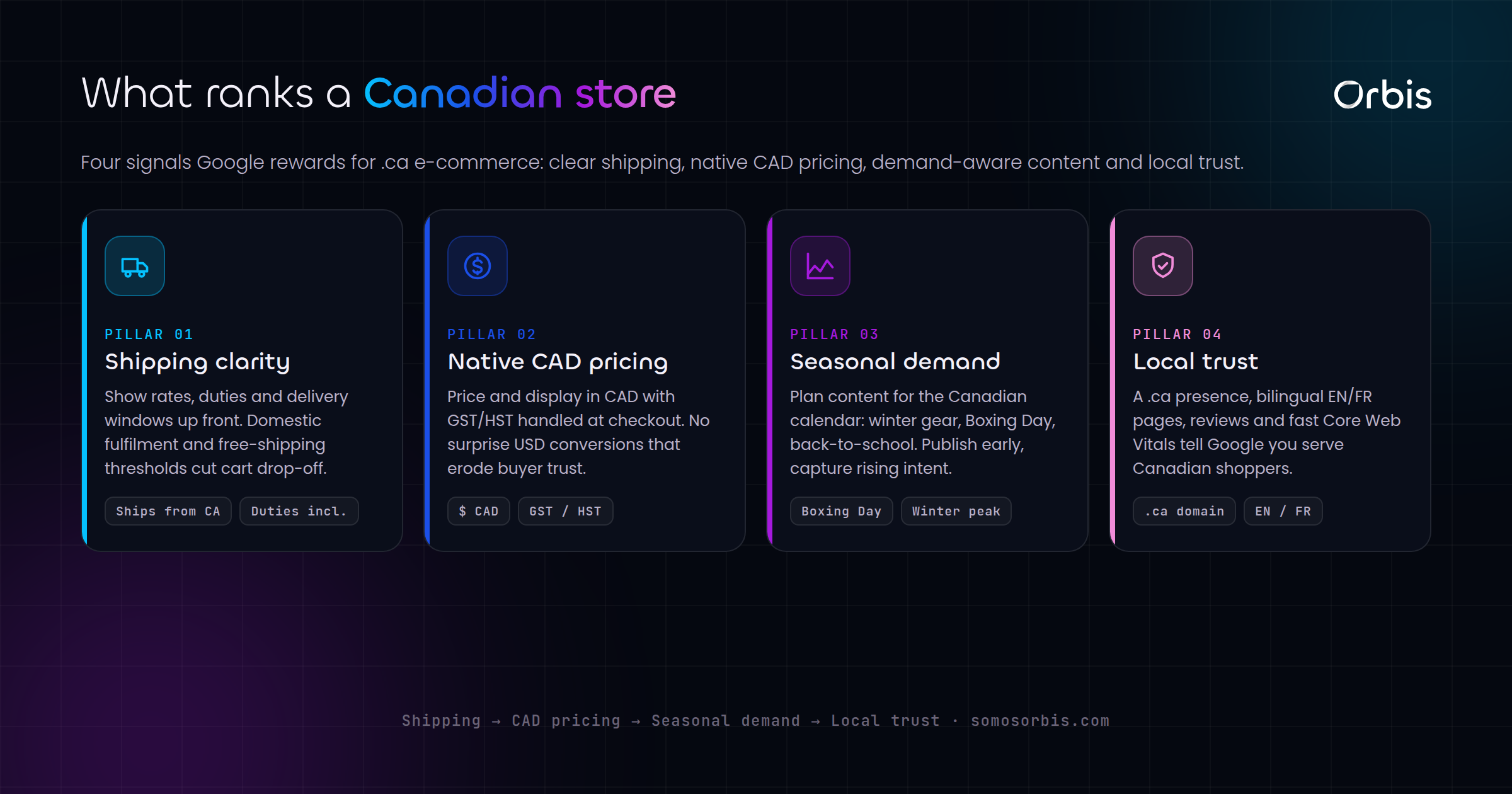
Search engines serve results based on intent, location and language. A shopper in Vancouver searching "winter boots" is not looking for a U.S. retailer that charges duties at the border, quotes prices in USD and can't ship to a BC address without a surcharge. Google knows this, and it increasingly favours stores that signal Canadian relevance clearly. Three structural factors separate Canadian e-commerce SEO from generic playbooks:
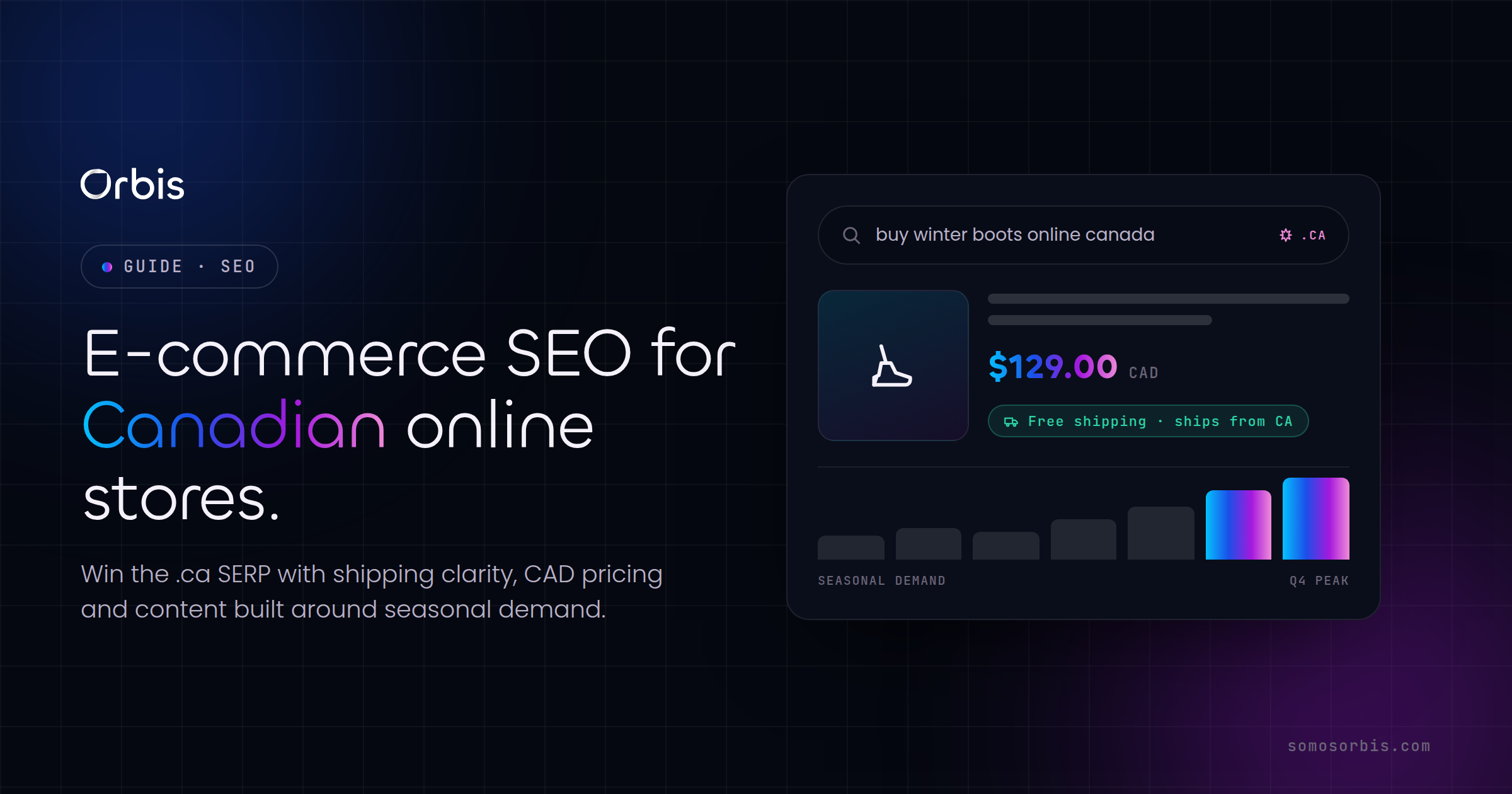
- Currency expectations. Canadian shoppers want to see CAD pricing immediately. A page that defaults to USD creates friction, raises bounce rates, and sends negative engagement signals back to search engines.
- Shipping geography. Canada is the second-largest country by land area with a population concentrated in a handful of metros. Shipping cost, speed and coverage vary enormously between downtown Toronto and a rural address in the territories. Search intent often includes shipping questions.
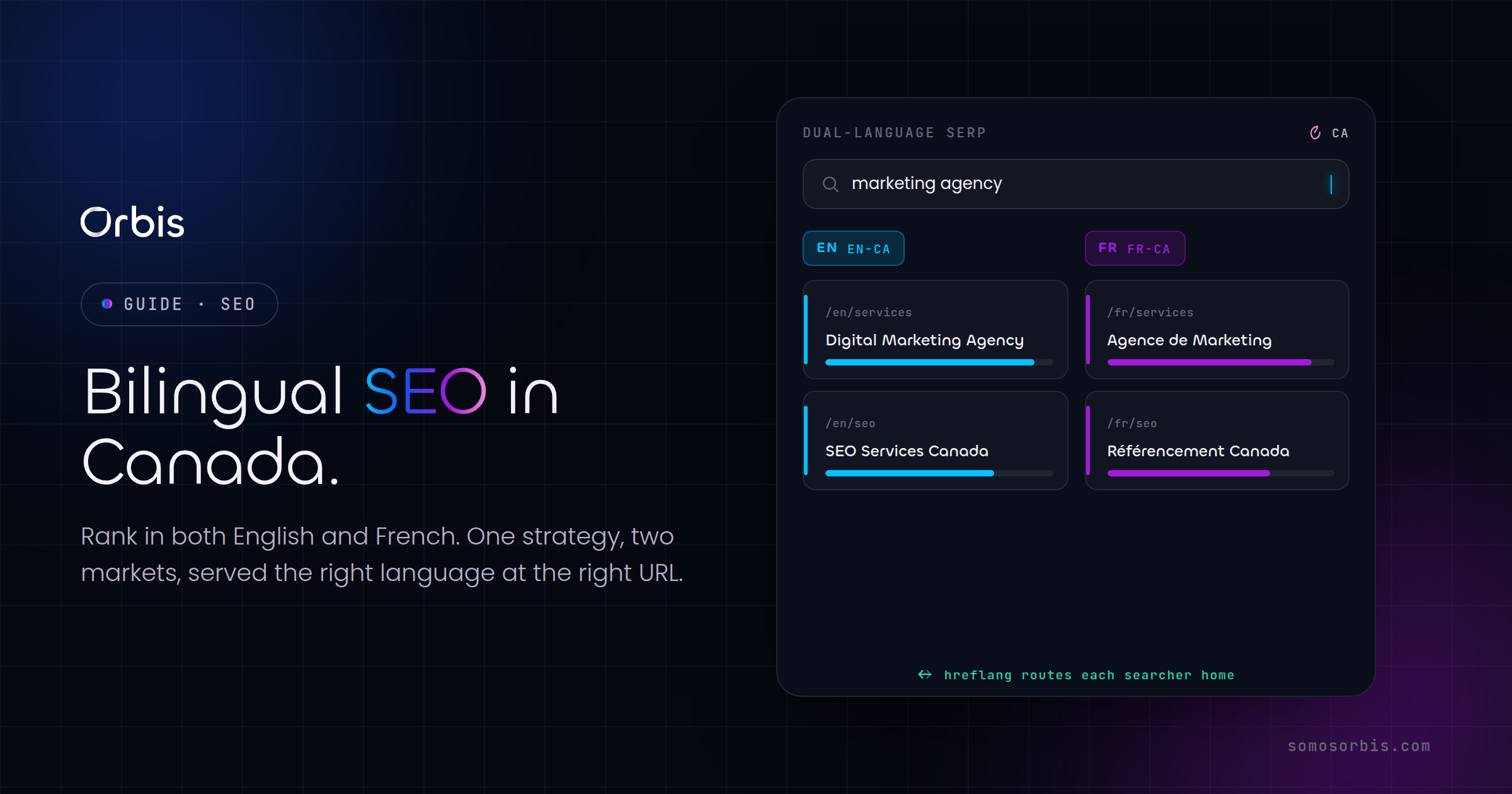
- Bilingual obligations. Reaching Quebec and bilingual buyers means French-language pages and proper
hreflangsignals, not machine-translated afterthoughts.
Each of these affects how you structure product pages, category pages and the technical signals that tell Google your store is built for Canadians.
Optimizing Product Pages for Canadian Shoppers
Product pages are where the purchase decision happens and where most of your long-tail organic traffic lands. For Canadian stores, a well-optimized product page does four jobs at once: it ranks, it answers shipping and pricing questions before the shopper has to ask, it earns rich results, and it converts.
Lead With CAD Pricing and Mark It Up
Display prices in Canadian dollars by default for Canadian visitors, and make sure your structured data agrees. Use Product schema with an offers block that sets priceCurrency to CAD. This is what lets your listings appear with price and availability in Google's shopping and product result formats. A mismatch — CAD on the page but USD in the markup, or no currency at all — can suppress rich results or show the wrong price in search, which destroys trust before the click even lands.
Practical checklist for product schema on a Canadian store:
- Set
priceCurrencytoCADand keep the displayed price in sync with the markup. - Include
availability(InStock / OutOfStock) so seasonal stockouts don't mislead shoppers. - Add
aggregateRatingandreviewonly when you have genuine, on-page reviews — never fabricate them. - Use
shippingDetailsto declare Canadian shipping rates and delivery estimates directly in the offer.
Answer Shipping Questions on the Page
Shipping is the number-one source of e-commerce cart abandonment, and in Canada it carries extra weight because rates and timelines vary so much by region. Bake shipping clarity into the product page itself rather than burying it in a policy link. Spell out: free-shipping thresholds in CAD, estimated delivery windows to major metros (Toronto, Montreal, Vancouver, Calgary), whether you ship to PO boxes and northern communities, and how duties are handled if any inventory ships from outside Canada. This content does double duty — it reduces abandonment and it gives search engines genuine, locally relevant text to rank for queries like "free shipping winter coats Canada."
Write Descriptions for People, Not Templates
Manufacturer-supplied descriptions are duplicated across thousands of stores and rarely rank. Rewrite them with Canadian context: sizing in the units your customers use, seasonal use cases ("rated for Prairie winters"), and the specific benefit a shopper is searching for. Unique, useful copy on every product page is one of the highest-leverage moves in e-commerce SEO for Canadian stores, and it compounds as your catalogue grows.
Category Pages: The Real Ranking Workhorses
For most stores, category and collection pages capture far more head-term search volume than any single product page. "Women's running shoes," "standing desks," "espresso machines" — these are category-level queries, and the page that ranks is usually a well-structured collection page, not a product. Yet category pages are routinely neglected, left with nothing but a grid of products and a one-line heading.
Add Substantive, Indexable Copy
Give every important category page a block of genuinely useful introductory or supporting copy: what to look for when buying, how Canadian seasonality affects the choice, sizing and compatibility notes, and a short buyer's FAQ. Place it where it helps shoppers — an intro paragraph above the grid and a longer guide below it works well — and keep it honest and specific. This is the text that lets a collection page rank for competitive head terms.
Control Crawling of Faceted Navigation
Filters and facets (colour, size, price, brand) generate enormous numbers of URL combinations. Left unmanaged, they waste crawl budget, create duplicate content, and dilute ranking signals across near-identical pages. Manage them deliberately:
- Decide which filtered views deserve to be indexed — usually a small set with real search demand, like "men's waterproof hiking boots."
noindexor block the combinatorial long tail that has no search value.- Use canonical tags to point filtered variants back to the core category where appropriate.
- Keep your internal linking pointing at the canonical, indexable versions.
Link Categories Together Logically
A strong internal linking structure spreads authority through your catalogue and helps Google understand how your products relate. Link parent categories to subcategories, cross-link complementary collections ("snow boots" ↔ "winter jackets"), and surface seasonal collections prominently when demand spikes. The same internal-linking discipline that powers category SEO also underpins off-site authority — see our guide to link building for Canadian websites for the external half of the equation.
Planning for Canadian Seasonal Demand
Seasonality is not a footnote in Canadian retail — it is the calendar that revenue runs on. Organic visibility takes weeks to build, so the stores that win the peaks are the ones that prepared months earlier.
Map the Canadian Retail Calendar
Build your content and optimization roadmap around the moments that actually drive Canadian demand:
- Back-to-school (August–early September): supplies, electronics, apparel, dorm and commuter gear.
- Black Friday & Cyber Monday (late November): the single biggest discount window, now firmly established in Canada.
- Holiday gifting (December): gift guides, bundles and shipping-deadline messaging.
- Boxing Day & Boxing Week (December 26 onward): a distinctly Canadian post-Christmas surge that U.S.-oriented playbooks miss entirely.
- Winter gear season (October–February): sustained demand for cold-weather products across most of the country.
Prepare Seasonal Pages Early and Keep Them Live
Don't build a "Boxing Day deals" page on December 24 and delete it on December 27. Create durable seasonal landing pages, keep the URLs persistent year over year, and update the content and offers as each season approaches. A page that has accumulated authority across multiple cycles will outrank a freshly minted competitor every time. Start optimizing roughly 8 to 12 weeks ahead of each peak so the pages are indexed, linked and earning visibility before demand arrives.
Use Schema and Availability Signals During Peaks
During high-traffic windows, accurate availability and pricing markup matters even more. Keep availability current as stock moves, reflect sale pricing in your offer markup, and make sure shipping cut-off dates are visible on product and category pages. Shoppers searching in late December are filtering hard on "will it arrive in time" — answer that and you convert the click.
Technical and Bilingual Foundations
None of the above ranks reliably without clean technical signals underneath. For Canadian stores, prioritize:
- Hreflang and language targeting: serve English and French versions correctly, with reciprocal
hreflangtags so Google shows Quebec shoppers the French page and the rest of the country the English one. - Core Web Vitals: fast, stable product and category pages, especially on mobile where a large share of Canadian shopping traffic originates.
- Clean URL and canonical structure: human-readable URLs, consistent canonicals, and a logical hierarchy from category to product.
- Honest signals throughout: real reviews, accurate stock, and pricing that matches the markup. Quality processes here protect both rankings and customer trust.
These foundations matter whether you sell to consumers or other businesses. If your store serves a B2B audience, the buying cycle and keyword strategy shift considerably — our breakdown of B2B SEO and lead generation in Canada covers how to adapt.
A Practical Rollout Sequence
Putting it all together, here is a sensible order of operations for a Canadian store improving its e-commerce SEO:
- Audit and fix product schema so every offer declares CAD pricing and accurate availability.
- Rewrite the descriptions on your top-selling and highest-traffic products with genuine Canadian context.
- Add substantive copy and buyer FAQs to your most important category pages.
- Bring faceted navigation under control with deliberate indexing and canonical rules.
- Surface shipping clarity — thresholds, timelines, coverage — directly on product and category pages.
- Build durable seasonal landing pages and start optimizing 8–12 weeks before each peak.
- Verify bilingual
hreflangand mobile Core Web Vitals across the catalogue.
Canadian e-commerce SEO is won in the details that generic playbooks ignore: CAD pricing shown up front, shipping answered before the question, and seasonal pages that have earned authority across years rather than days.
Turn These Tactics Into a Plan
Product and category optimization, schema, faceted navigation and seasonal planning all compound — but only when they're executed in a coordinated, documented way rather than as one-off fixes. If you want a structured organic program built specifically for the Canadian market, explore our e-commerce SEO services for Canadian online stores. We combine documented processes, revenue-focused execution and compliance-by-design with the experience of a Google Partner agency that has served over 500 clients across more than 15 years — so your store ranks, ships and sells through every season of the Canadian calendar.