

Link building is the part of SEO that most Canadian businesses either ignore or get wrong. You can publish excellent content, fix every technical issue, and still watch competitors outrank you for searches that matter in Toronto, Vancouver, Montreal or Calgary. The difference, more often than not, is authority — and in Google's world, authority is still earned largely through links from other credible websites. This guide is about earning those links the right way for the Canadian market: from local media, industry associations, regional directories and the kind of .ca domains that signal you genuinely belong here.
If you want the full picture of how link building fits alongside content, technical SEO and local search, start with our complete guide to SEO in Canada, which is the pillar this article sits under. Here, we go deep on one thing: how Canadian companies actually earn relevant, high-authority backlinks without resorting to tactics that get sites penalized.
Why Link Building Looks Different in Canada
Most link-building advice online is written for the United States or the UK. It assumes a deep bench of national publications, thousands of niche blogs, and link marketplaces stuffed with high-traffic sites. Canada is a different environment, and pretending otherwise leads to wasted budget.
A few realities shape how Canadian businesses should approach this:
- A smaller, more concentrated media landscape. Outlets like the Toronto Star, the Vancouver Sun, the Globe and Mail, CBC and regional business journals carry enormous weight, but there are fewer of them. A single placement in a respected Canadian outlet can move the needle more than a dozen low-quality links.
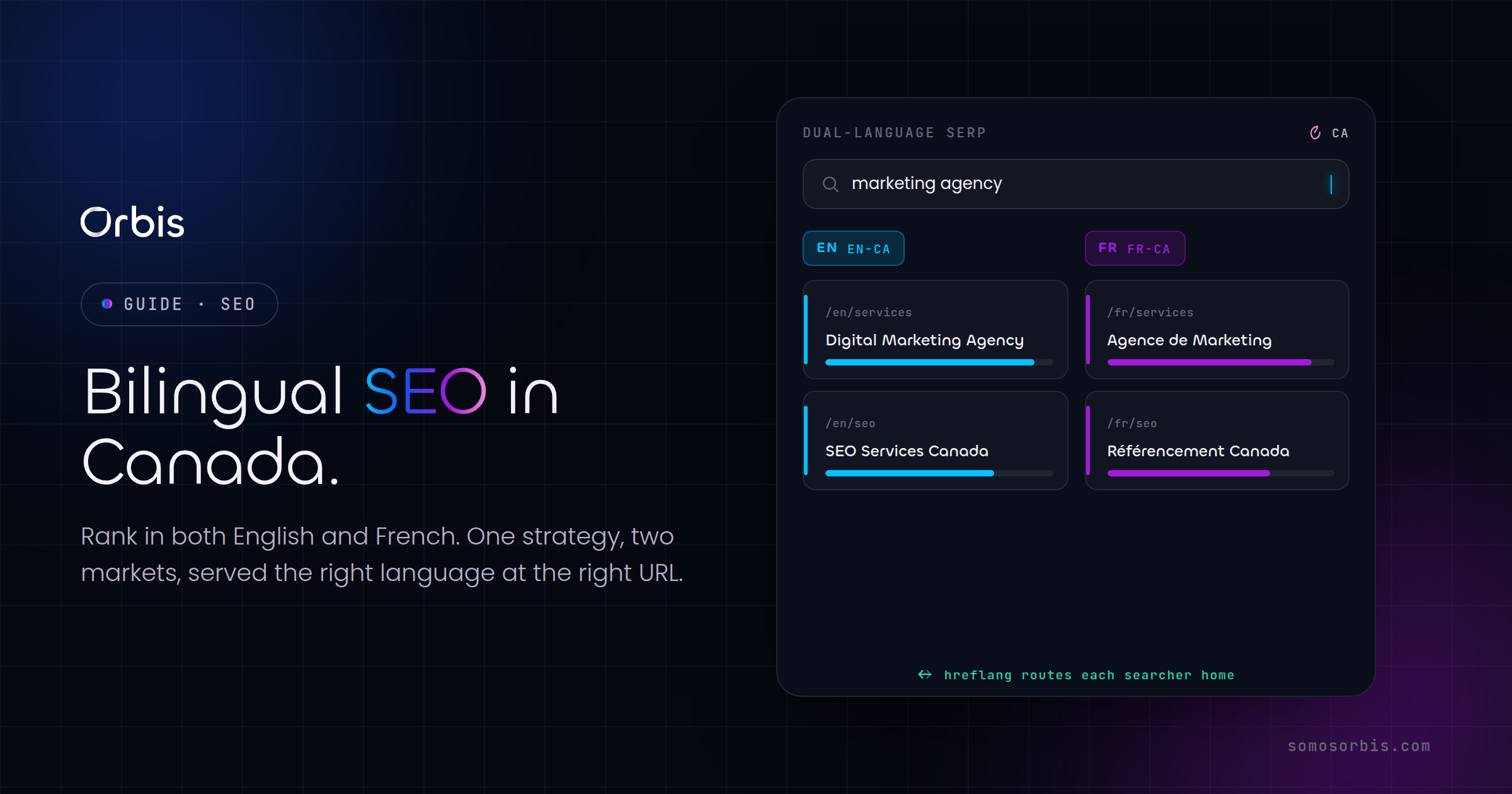
- Bilingual reality. If you operate in Quebec or serve French-speaking customers nationwide, links from French-language Canadian sites (La Presse, Le Devoir, local Quebec associations) carry signals that English-only outreach will never replicate.
- The .ca trust signal. Links from .ca domains, provincial government sites, universities and chambers of commerce reinforce to Google that your business is genuinely Canadian and locally relevant — which matters enormously for the regional searches you actually want to win.
- Tighter networks. Canadian industries tend to be relationship-driven. Associations, boards of trade and regional business communities are real, active and reachable — which is good news for link building done through genuine participation.
The takeaway: in Canada you are usually playing a game of fewer, better links. Quality and relevance beat volume almost every time.
What Makes a Backlink Actually Worth Earning
Before chasing links, it helps to know which ones move rankings. Not all backlinks are equal, and some can actively hurt you.
The qualities that matter most
- Relevance. A link from a Canadian construction-industry publication to your contracting business is worth more than a link from an unrelated lifestyle blog, even if the blog has a higher domain rating.
- Local and topical authority. A link from a Vancouver business association to a Vancouver company is a powerful local relevance signal. Google reads context, not just numbers.
- Editorial placement. Links earned inside real content — an article, a resource page, a news story — outperform links dropped into footers, widgets or comment sections.
- Trust of the linking domain. Government (.gc.ca, provincial), educational (.edu, universities), and established media domains pass strong trust.
- Anchor text that reads naturally. Over-optimized anchors ("best SEO agency Toronto" repeated everywhere) look manipulative. Natural, varied anchors are safer and more credible.
The links to avoid
- Paid link networks and "guaranteed DA50 links" packages — these are the fastest route to a manual penalty.
- Mass-submitted, low-quality directories that exist only to host links.
- Private blog networks (PBNs) and link exchanges at scale.
- Irrelevant foreign links that have nothing to do with your market or industry.
If a link strategy feels like a shortcut, it usually is — and Google has spent two decades getting better at catching shortcuts. The approaches below are slower but durable.
Where Canadian Businesses Find Real, High-Authority Links
Here is where to actually spend your time. These sources are realistic for Canadian companies of most sizes, and they produce links that hold their value.
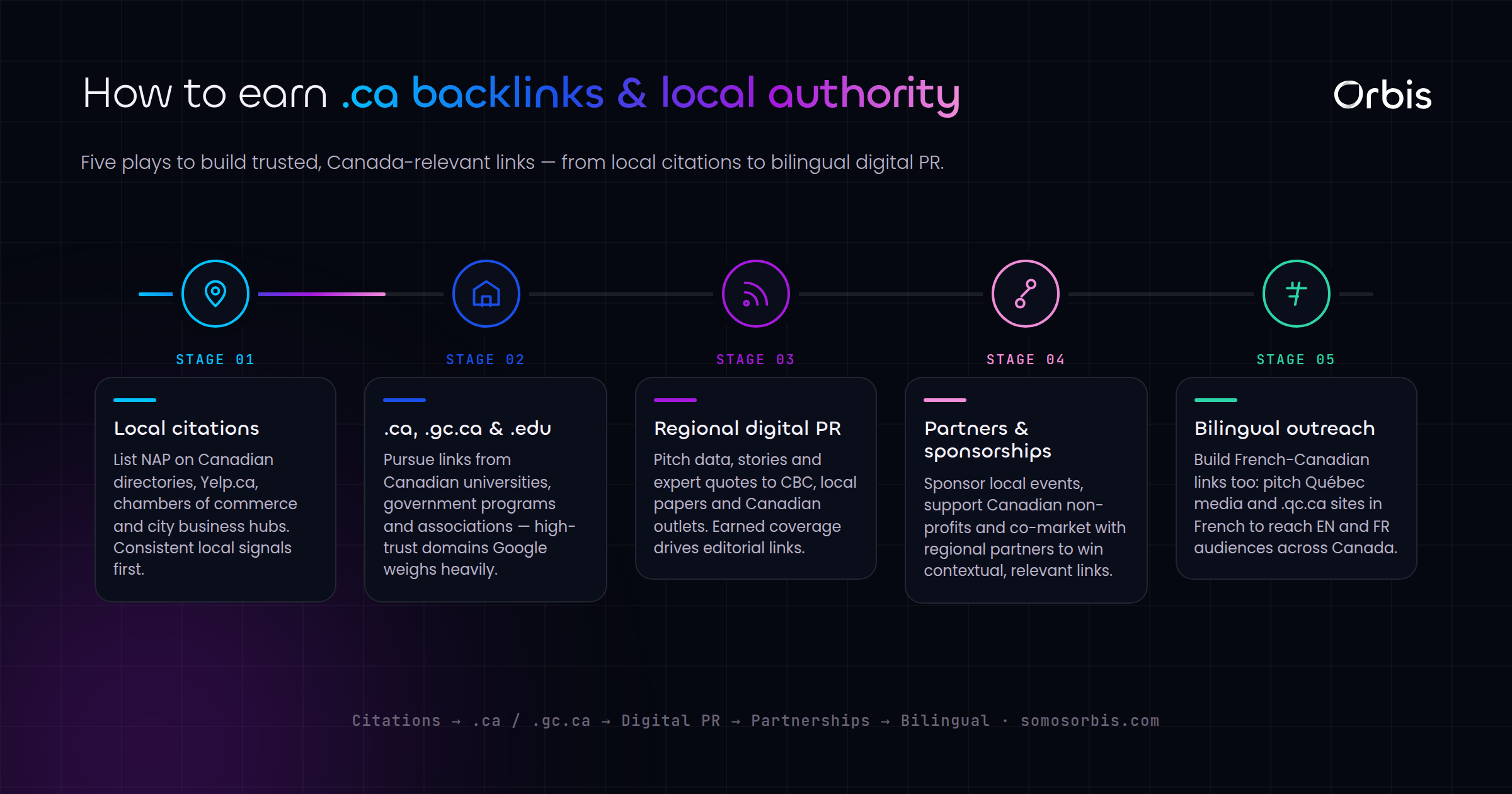
1. Local and regional media
Canadian newsrooms — both national and regional — are constantly looking for local angles, expert commentary and data. You do not need to be a national brand to earn coverage. A Calgary energy-services firm commenting on regional hiring trends, or a Montreal retailer sharing data on bilingual shopping habits, is exactly the kind of source local journalists want.
Tactics that work:
- Offer genuine expert commentary on stories already developing in your sector.
- Publish original data or surveys about your local market — Canadian-specific data is scarce and link-worthy.
- Pitch to regional business journals (Business in Vancouver, Toronto's business press, regional editions) where competition for attention is lower than at national outlets.
2. Industry associations and boards of trade
Almost every Canadian industry has a national or provincial association, and most cities have a board of trade or chamber of commerce. Membership often comes with a directory listing and a link, and active participation — speaking, contributing articles, sponsoring events — opens the door to more.
- Boards of Trade and Chambers of Commerce in your city.
- Provincial and national industry associations relevant to your sector.
- Trade bodies that publish member spotlights or resource libraries.
These links are doubly valuable: they are relevant, and they are unmistakably Canadian.
3. Niche and regional directories that still matter
The directory game has a bad reputation, and most directories deserve it. But a small set of curated, real-world directories still pass value and drive referral traffic — especially local ones tied to a city, region or trusted association. The test is simple: would a real customer ever use this directory to find a business like yours? If yes, it is worth a listing. If it exists only to sell links, skip it.
4. Universities, colleges and community organizations
Canadian post-secondary institutions and registered non-profits run resource pages, partner listings and event pages that link out. Sponsoring a student competition, offering a scholarship, partnering on research, or supporting a community initiative can earn a link from a high-trust .edu or .org domain — links that are nearly impossible for competitors to replicate quickly.
5. Partners, suppliers and clients
Your existing business relationships are an underused link source. Suppliers' "where to buy" pages, partner directories, and client case studies (with their permission) are all legitimate, relevant links. Because they reflect real commercial relationships, they are exactly what Google wants to reward.
Content That Earns Links Instead of Begging for Them
The most sustainable link building is the kind where other people link to you because your content is genuinely the best resource available. This is where SEO content strategy and link building merge.
Formats that consistently earn Canadian links:
- Original, Canada-specific data. Surveys, market reports and benchmarks about Canadian consumers, regions or industries. Because this data is rare, journalists and bloggers cite it — and citations are links.
- Definitive local guides. A genuinely thorough resource — say, a guide to regulations or seasonal buying patterns in your sector — becomes a reference others point to.
- Free tools and calculators. A useful calculator tied to your industry (financing, sizing, cost estimates in CAD) attracts links for years.
- Strong visual assets. Maps, charts and infographics built on Canadian data get embedded and credited.
This approach pairs naturally with the broader work we cover in our SEO in Canada guide: the better your content foundation, the easier every link becomes to earn.
Local Link Building for Multi-City Businesses
If you serve more than one Canadian market, your link strategy has to reflect that geographic spread. National links help your overall authority, but locally relevant links are what win city-level searches.
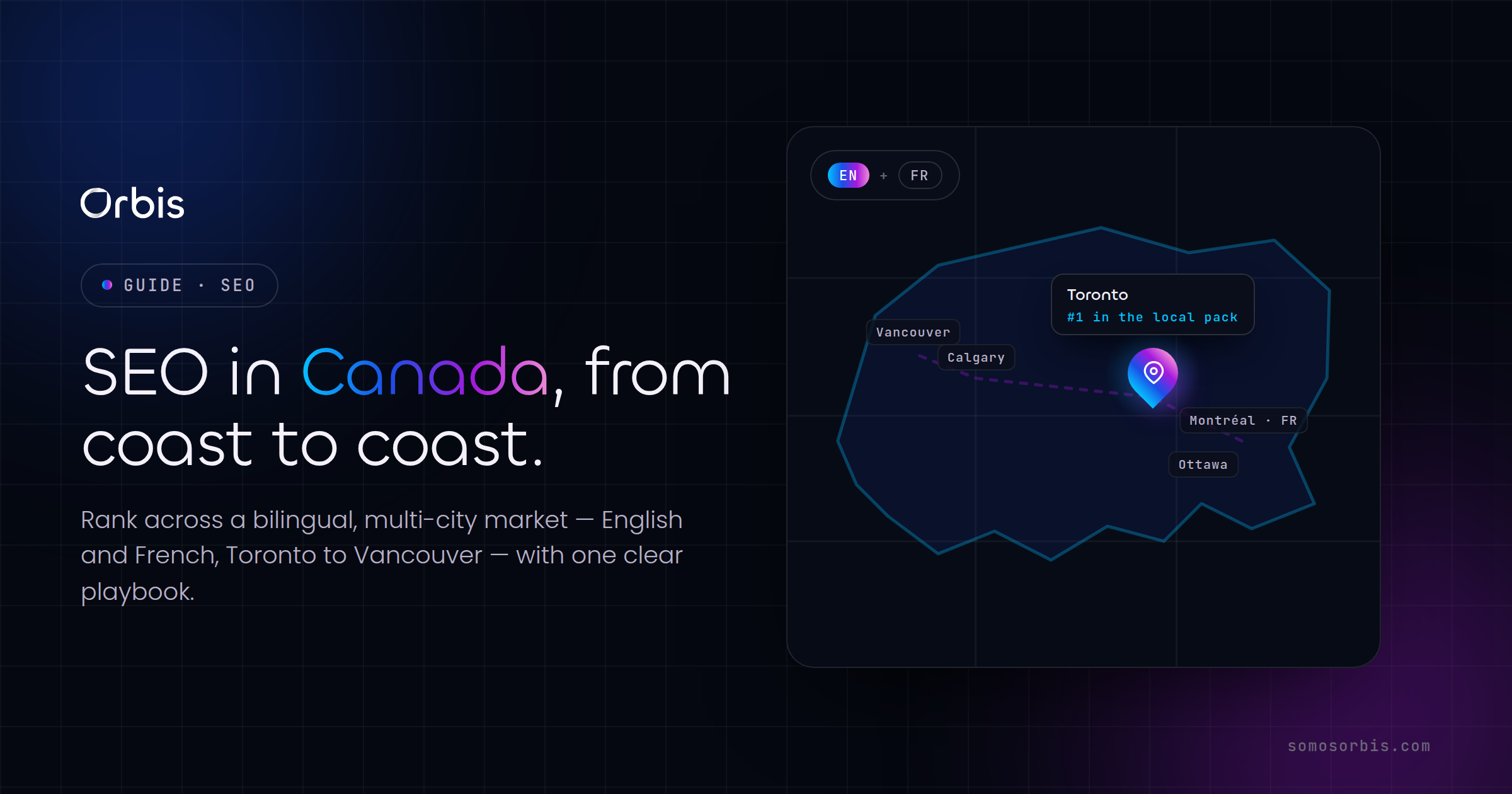
For a business operating across, say, Toronto, Vancouver and Montreal, that means earning links from each of those markets: the Toronto chamber, a Vancouver industry blog, a Montreal-French-language directory. Each local link reinforces your relevance for searches in that city. This is tightly connected to your overall local search presence, which we cover in detail in our breakdown of local SEO across Toronto, Vancouver and Montreal. Local citations, Google Business Profile consistency and local links all work as one system — links without clean local signals underperform, and vice versa.
Practical priorities for multi-city link building:
- Map your priority cities and find the local media, associations and directories specific to each.
- Create or adapt a location page worth linking to in each market — not thin doorway pages, but genuinely useful local resources.
- Pursue at least a handful of locally relevant links per priority market before scaling.
Link Building for Canadian E-commerce
Online stores have their own link-building playbook. Product and category pages rarely earn links on their own, so the work shifts toward content, partnerships and digital PR that point authority back to the pages that convert.
Effective tactics for Canadian online retailers:
- Gift guides and seasonal roundups timed to Canadian moments — Boxing Day, back-to-school, the holidays — that other sites reference and link to.
- Partnerships with Canadian creators, makers and complementary brands who link to your store.
- Supplier and "stockist" listings on the sites of brands you carry.
- Original buying-guide content that becomes a citation source.
Because e-commerce SEO has its own structural demands — site architecture, faceted navigation, product schema — link building should be planned alongside those. Our guide to e-commerce SEO for Canadian stores goes into how links, technical structure and content work together to grow revenue for online retailers.
A Practical Link-Building Workflow
Earning links consistently is a process, not a one-time campaign. Here is a workflow that holds up for Canadian businesses of most sizes.
- Audit your current backlinks. Understand what you already have, identify any toxic links, and see where competitors are getting theirs.
- Identify Canadian link targets. Build a list of relevant local media, associations, directories, universities and partners.
- Create or designate linkable assets. Make sure you have something genuinely worth linking to before you do outreach.
- Do relationship-first outreach. Personalized, relevant pitches to real people — not mass templates.
- Track, measure and prune. Monitor which links land, what they do for rankings, and disavow anything harmful.
Done consistently, this compounds. Six months of disciplined link building usually outperforms any one-time "link blast," and it does so without putting your site at risk.
Measuring Whether Your Links Are Working
Links are a means, not an end. Tie them back to outcomes:
- Authority growth — is your domain earning more, better-quality referring domains over time?
- Ranking movement — are the pages you're building links to climbing for their target Canadian keywords?
- Referral traffic and revenue — are those links sending real visitors who convert?
A link from a respected Canadian outlet that sends qualified visitors and lifts rankings is worth far more than ten links that do nothing. Judge your program by results, not by raw counts.
Getting Help With Canadian Link Building
Link building is the part of SEO that most rewards experience, relationships and consistency — and the part where mistakes (paid networks, spammy directories, over-optimized anchors) can do lasting damage. If you'd rather have a team that already knows the Canadian media, associations and directory landscape do this work for you, that is exactly what our link building service for Canadian websites is built for: earning relevant, high-authority backlinks that strengthen your local presence and hold their value over time.
Whether you handle it in-house using the playbook above or partner with us, the principle is the same: in Canada, fewer and better wins. Build links the way Google wants you to — through real relevance, real relationships and content genuinely worth citing — and your authority will compound for years.
Ready to grow your Canadian authority the right way? Explore our link building service for Canadian websites and let's build a backlink profile that competitors can't easily copy.