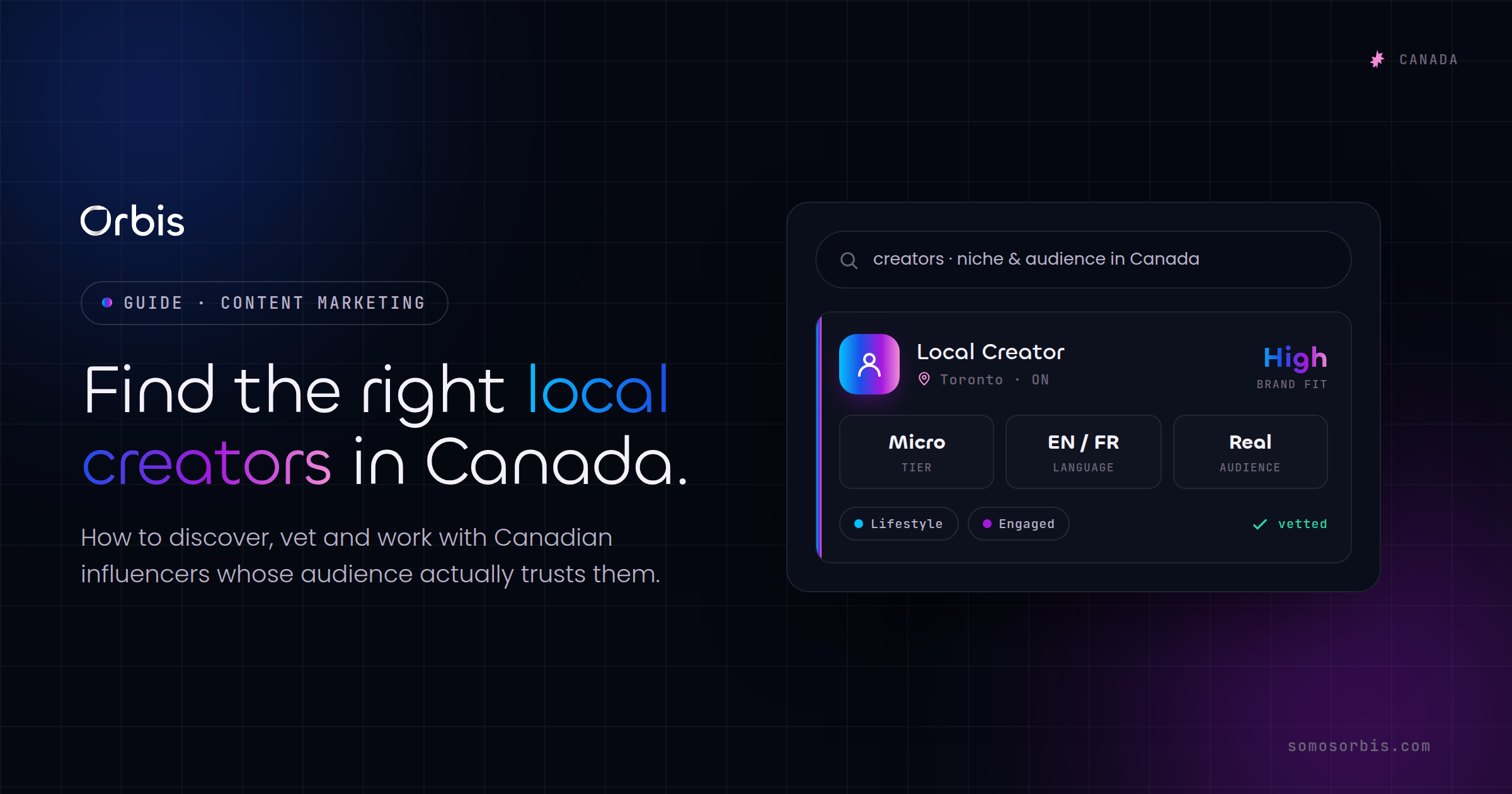
Influencer marketing in Canada looks deceptively similar to the playbooks you read about out of the United States or the UK. Same platforms, same creator economy buzzwords, same talk of engagement rates and affiliate links. But run a campaign here without accounting for the things that make Canada distinct, bilingual audiences, a smaller but tighter creator community, strict disclosure rules, and a buying calendar that runs on Boxing Day and back-to-school rather than Black Friday alone, and you will burn budget on reach that never converts. This guide walks Canadian brands through finding the right local creators, structuring partnerships that hold up legally, and building campaigns that actually move revenue.
If you are still mapping out your broader content program, start with our complete guide to content creation in Canada, which sets the strategic frame this article builds on. Influencer marketing is one channel inside that larger system, and it works best when it is connected to the rest of your content rather than treated as a one-off campaign.
Why Canadian Influencer Marketing Is Its Own Discipline
The Canadian creator market is smaller than the American one, and that is an advantage if you use it correctly. Audiences here are skeptical of obvious imports. A campaign built around a Los Angeles lifestyle creator might generate impressions, but it rarely generates trust with a buyer in Calgary or Halifax who can tell the content was not made for them. Local creators carry credibility that national ad budgets cannot buy, and that credibility is the entire point of working with influencers in the first place.
There are three structural realities that shape every campaign in this market:
- Bilingual reach. Roughly a fifth of Canadians speak French as a first language, concentrated in Quebec, parts of New Brunswick, and Franco-Ontarian communities. The Quebec creator ecosystem is large, loyal, and largely separate from the English-Canadian one. Brands that treat French Canada as an afterthought leave one of the most engaged audiences in the country on the table.
- Regional identity. A creator in Vancouver speaks to a different lifestyle and price sensitivity than one in Toronto or Winnipeg. Regional pride is real, and creators who lean into it tend to convert better with their home audiences.
- Disclosure expectations. Canada has clear advertising standards around sponsored content. Both the brand and the creator carry responsibility, and audiences here notice and reward transparent partnerships.
Finding the Right Canadian Creators
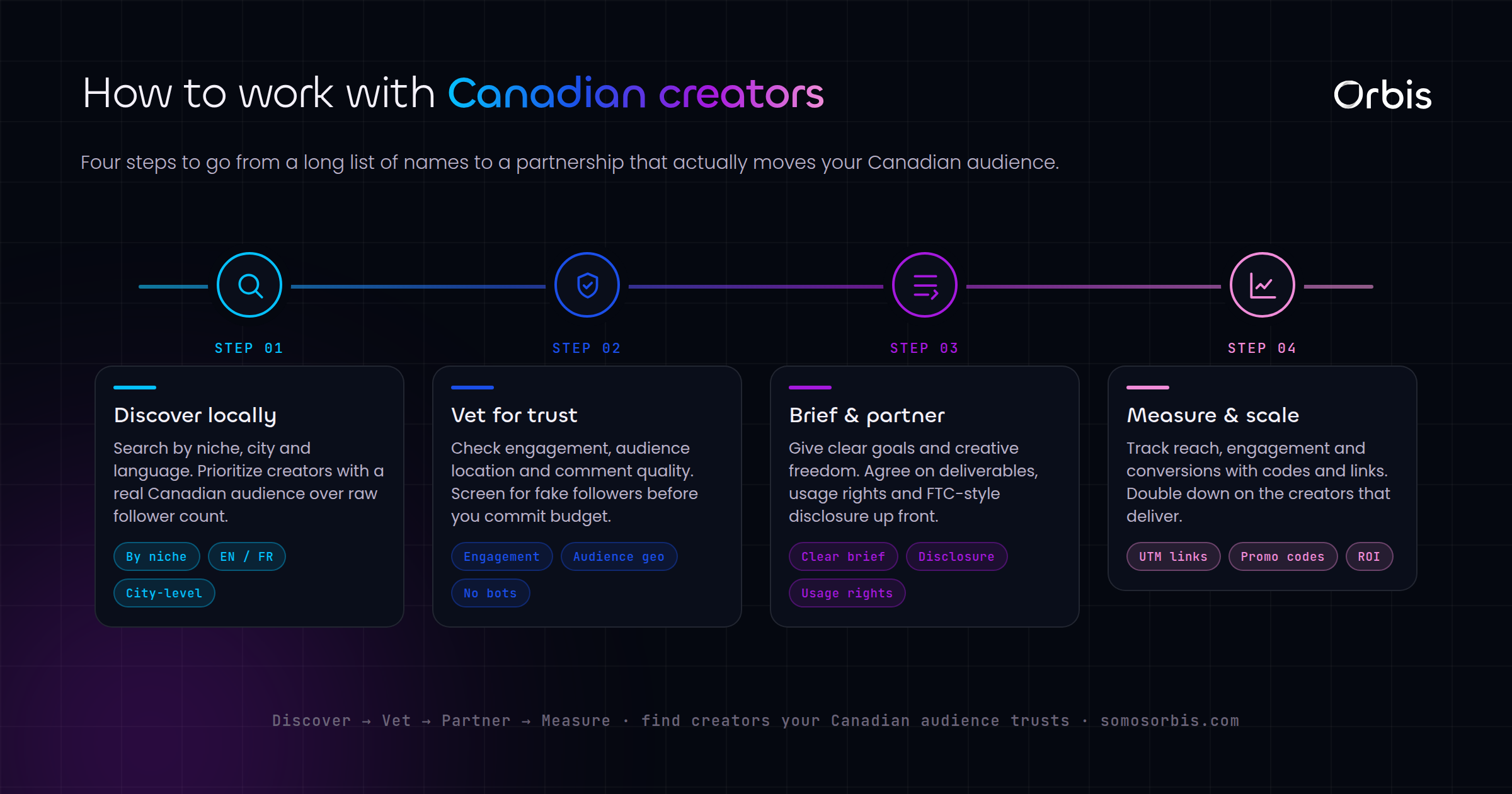
The biggest mistake brands make is chasing follower counts. A creator with 18,000 engaged followers in your actual market is worth far more than one with 400,000 followers scattered across countries you do not ship to. Start by defining who you need to reach, then work backward to the creators who already have that audience's attention.
Define your tiers before you reach out
Different campaign goals call for different creator sizes. A useful working model for the Canadian market:
- Nano creators (1K to 10K followers). Highest engagement, lowest cost, strongest local trust. Ideal for community-driven launches, local retail, and authentic word-of-mouth. You will need several to hit meaningful reach, but the conversion quality is excellent.
- Micro creators (10K to 100K). The workhorse tier for most Canadian brands. Enough reach to matter, still personal enough to feel genuine, and usually willing to negotiate flexible deals.
- Mid-tier creators (100K to 500K). Good for category awareness and seasonal pushes. Expect professional rate cards and tighter usage terms.
- Macro and celebrity creators (500K+). Reach plays for major launches or national retail. Costly, and the engagement-per-dollar usually drops. Use sparingly and with clear awareness goals.
Where to actually look
You do not need an expensive platform to find good Canadian creators, though they help at scale. Practical sources:
- Hashtag and geotag search. On Instagram and TikTok, search location tags for your city plus your category, for example Toronto skincare or Montreal coffee. The creators who already post about your space are warm leads.
- Your own customers. Some of your best creators are already buying from you. Check who tags your brand and look at whether they create content others engage with.
- Competitor and adjacent-brand partnerships. See who is partnering with brands one step away from yours. Those creators already understand sponsored work and have an audience primed for your category.
- French-language platforms. Quebec creators are often more active on Facebook and have strong YouTube and TikTok followings. Do not rely only on English-language discovery tools, or you will miss them entirely.
Vet for fit, not just numbers
Before you commit budget, check three things. First, audience geography, ask for a screenshot of their follower breakdown by country and city; if most of their audience is outside Canada, the local conversion will disappoint. Second, engagement quality, read the comments; real questions and tagged friends signal a real community, while generic emoji replies often signal bought engagement. Third, brand safety, scroll back a year and make sure their past content and values line up with yours.
The Bilingual Advantage Most Brands Ignore
Running a national campaign in English only means competing in the most crowded part of the Canadian market while ignoring one of the most loyal. French-Canadian audiences respond strongly to creators who speak to them in their own language and cultural context, and not by simply translating an English caption.
There are two ways to approach bilingual influencer campaigns. The first is parallel campaigns, where you partner with separate English and French creators, each producing content native to their audience. This is almost always the stronger approach because the content feels authentic on both sides. The second is bilingual creators who naturally move between both languages, which works well in markets like Montreal and Ottawa where audiences themselves are bilingual.
If you are building out French-language content across more than just influencer work, our guide to creating bilingual content for the Canadian market covers how to keep both language streams consistent without one feeling like a translation of the other. Apply the same principle to creator briefs: give French creators creative latitude rather than a translated script, and the content will land.
Disclosure and Compliance: Get This Right
Canadian advertising standards require that any material connection between a brand and a creator be clearly disclosed. If you paid the creator, sent free product, offered a commission, or provided any other incentive, the audience must be able to tell it is a paid relationship. This is not optional, and responsibility falls on both the brand and the creator.
Practical rules to build into every contract and brief:
- Make disclosure clear and upfront. Labels like Ad, Sponsored, or Paid Partnership should be visible without the viewer having to tap "more" or hunt through hashtags. Platform tools such as the paid partnership tag are good, but pair them with a written disclosure in the caption.
- Disclose in both languages. A French-language post needs a French disclosure such as "Publicité" or "Collaboration commerciale." An English tag on French content does not meet the standard.
- Cover affiliate and commission deals too. If a creator earns a commission on sales through their link or code, that is a material connection and must be disclosed, even if you never paid a flat fee.
- Require authentic claims. Creators should not make claims about your product they cannot stand behind. Keep a short list of approved and prohibited claims in every brief so enthusiasm never crosses into misleading territory.
- Keep records. Save the brief, the contract, and screenshots of the live posts. If a partnership is ever questioned, documentation protects everyone.
This is exactly the kind of work that benefits from documented processes. Building disclosure language, approved-claim lists, and review steps into a repeatable workflow means compliance is handled by default rather than negotiated campaign by campaign, which keeps you aligned with current advertising regulations while letting creators stay genuine.
Structuring the Partnership
A good creator partnership is specific about deliverables and generous about creative freedom. The creator knows their audience better than you do, so dictate the message, not the execution.
What to put in the brief
- Campaign goal in one sentence, awareness, traffic, or direct sales, so the creator can shape content toward it.
- Key messages, the two or three points that must come through, plus any required disclosure language.
- Deliverables, exact formats and counts, for example one in-feed reel, three stories, and one static post.
- Timing, posting windows tied to your calendar, whether that is a back-to-school push in August or a Boxing Day promotion in late December.
- Usage rights, whether you can reuse the content in ads or on your own channels, and for how long. This is often more valuable than the post itself.
- Tracking, unique discount codes or UTM links so you can attribute results.
How to pay creators fairly
Canadian creators work across a few common models: flat fees per deliverable, product gifting for nano and micro tiers, affiliate commissions, or a hybrid of a smaller flat fee plus commission. Hybrid deals tend to align incentives best, the creator earns a baseline for their work and shares in the upside if the campaign performs. Always pay in CAD and be explicit about whether your rates include taxes.
Pairing Influencers with UGC
Influencer content and user-generated content are different tools that work powerfully together. Influencer posts borrow a creator's authority and audience; UGC gives you a library of authentic, repurposable assets that often outperform polished brand content in paid ads. Many of the creators you work with can produce both, a public post for their audience and a set of raw UGC assets licensed for your own channels.
If you want to build a repeatable engine for sourcing and using customer-style content, our breakdown of UGC strategy for Canadian brands shows how to turn one-off creator deliverables into an ongoing content supply. Negotiate UGC usage rights into your influencer contracts from the start, and a single partnership can feed weeks of organic posts and ad creative.
Measuring What Actually Matters
Vanity metrics make influencer marketing easy to fake and hard to justify. Reach and likes tell you a post happened; they do not tell you it worked. Tie every campaign to metrics that connect to revenue:
- Trackable conversions through unique codes and links, so you know which creator drove which sale.
- Cost per acquisition by creator and by tier, which usually reveals that nano and micro creators outperform the big names per dollar.
- Engagement rate relative to the creator's typical baseline, not just raw counts, since a spike above their norm signals the content resonated.
- Content performance in paid, since the real long-term value of many partnerships is the licensed assets you run as ads long after the original post.
- Audience growth and saves, softer signals that the partnership built durable brand awareness rather than a one-day spike.
Run a handful of small partnerships first, measure honestly, then double down on the creators and tiers that delivered. A test-and-scale approach beats betting your whole budget on a single high-follower name.
Bringing It Together
Influencer marketing in Canada rewards brands that respect the market's specifics: choose local creators with genuinely Canadian audiences, build separate-but-equal English and French campaigns, bake disclosure and approved claims into every brief, and measure against revenue rather than reach. Done this way, creator partnerships do more than generate impressions, they produce trusted endorsements and a steady supply of content you own and can reuse across paid and organic channels.
If you would rather have a partner handle sourcing, vetting, bilingual briefs, compliance, and measurement end to end, our team can help. Explore our influencer marketing services for Canadian brands to see how we run creator campaigns that hold up legally and actually drive revenue. As a Google Partner with a 4.9-star rating and more than 500 clients over 15-plus years, we build influencer programs as documented, repeatable systems, not one-off campaigns you have to rebuild every season.