
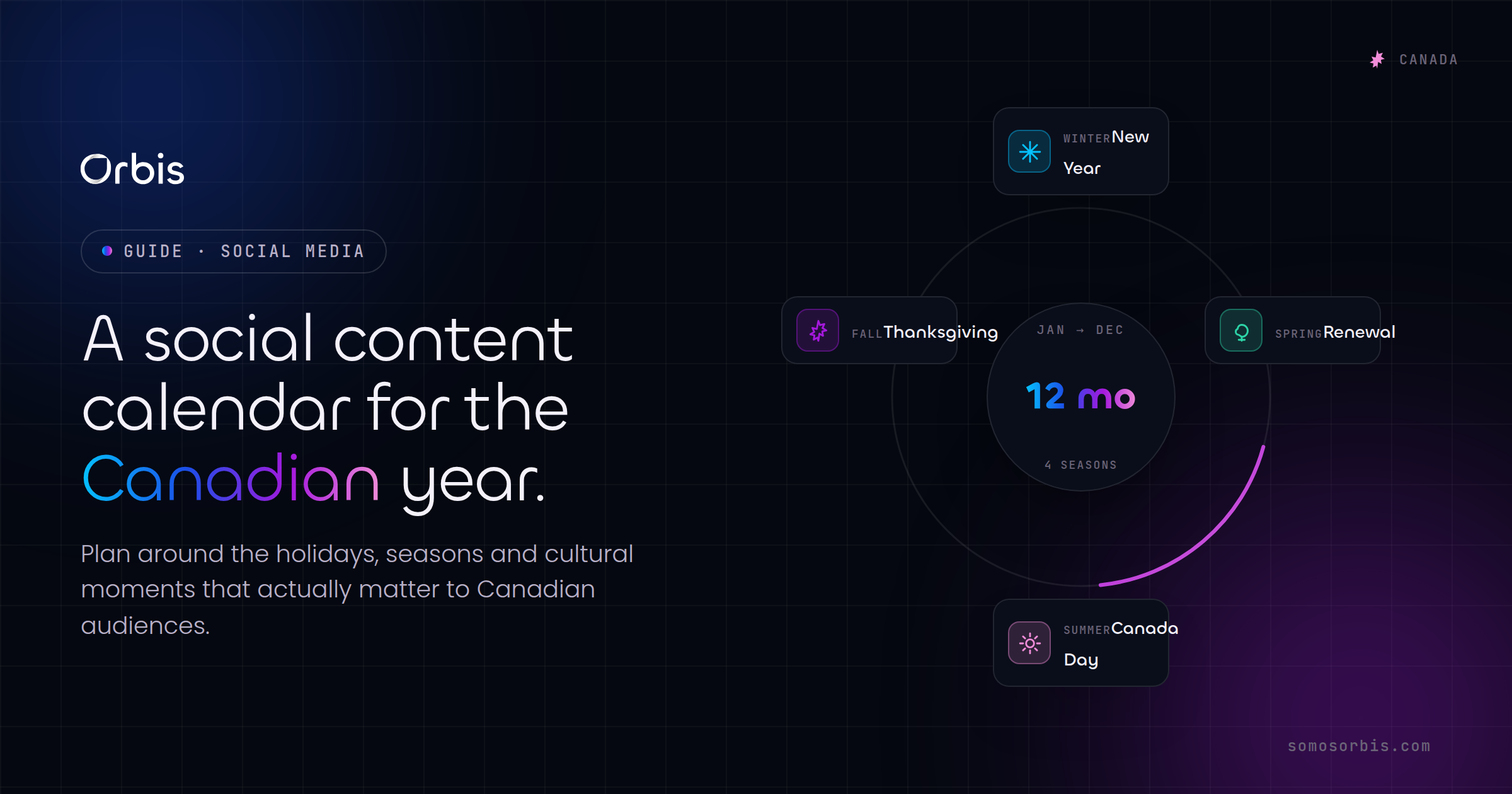
A social content calendar is the difference between scrambling for a post the morning of a long weekend and showing up with the right message at the right moment, every time. For Canadian brands, that planning challenge has a few wrinkles you won't find in a generic template: two official languages, weather that swings from -30°C to +30°C across the year, regional holidays that matter in Quebec but not Alberta, and a retail rhythm anchored by Boxing Day rather than the patterns you see south of the border. This guide gives you a month-by-month framework for building a calendar that fits the Canadian year, so your social presence feels timely, local and intentional instead of reactive.
If you're building your broader social program from the ground up, start with our complete guide to social media management in Canada as your foundation. This article zooms in on one critical layer of that system: the calendar itself.
Why a Canadian-Specific Calendar Matters
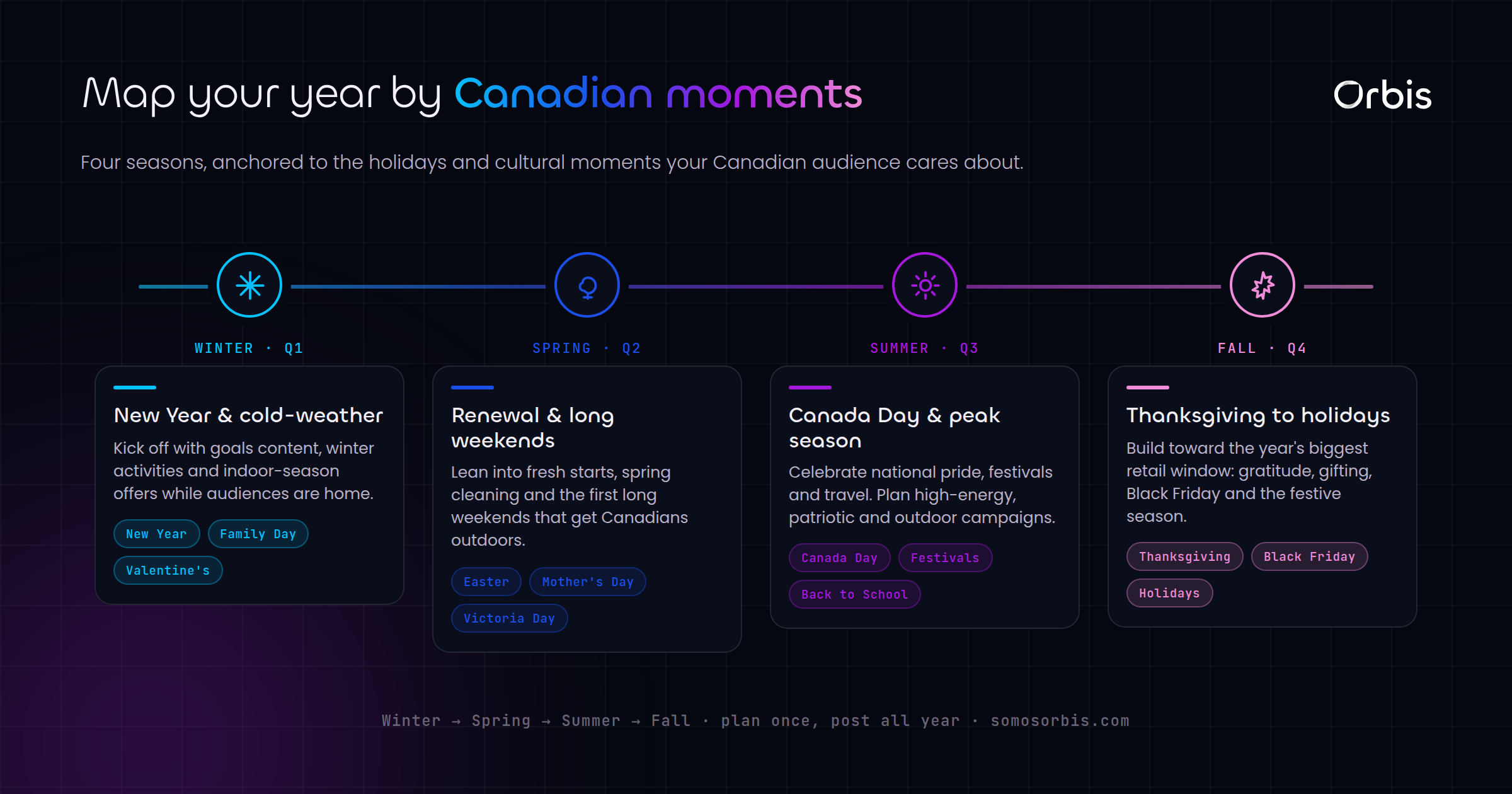
Most off-the-shelf content calendars are built for a US or global audience. They'll flag the Fourth of July, Thanksgiving in November and a Memorial Day sale, none of which map cleanly onto how Canadians actually shop, celebrate and engage. When you copy that rhythm, your content lands a beat off: you're posting about back-to-school in early August when Canadian families are still at the cottage, or running a "holiday weekend" promotion that doesn't line up with a single statutory holiday in your province.
A calendar tuned to the Canadian year does three things for you:
- It earns relevance. Posting about the first snowfall, a Victoria Day long weekend or playoff hockey signals that you understand your audience's actual life.
- It protects your bilingual reach. Planning ahead is the only way to give French and English content equal care rather than treating French as a rushed afterthought. We cover this in depth in our piece on bilingual content for Canadian brands.
- It reduces last-minute burnout. A documented calendar means your team isn't inventing posts under pressure, which is exactly when quality slips and brand voice drifts.
The Three Layers of a Strong Calendar
Before we get into the months, it helps to think about content in three layers. Every healthy Canadian calendar blends all three.
1. Evergreen Pillars
These are the recurring content themes that run all year regardless of season: educational posts, behind-the-scenes content, customer stories, product explainers and FAQs. Pillars should make up the bulk of your calendar, roughly 60 to 70 percent. They keep your feed useful even in quiet stretches between holidays.
2. Seasonal Moments
These are the dated, time-sensitive posts tied to holidays, weather shifts and cultural moments. They're the focus of this guide. Seasonal content should be about 20 to 30 percent of your output, enough to feel current without turning your brand into a holiday-greeting machine.
3. Reactive and Community Content
This is the layer you can't fully plan: trending conversations, replies, user-generated content and timely commentary. Leave roughly 10 percent of your calendar open for it, and pair it with a strong response practice, which we explore in our guide to community management for Canadian brands.
A Month-by-Month Canadian Content Calendar
Here's a practical walk through the year. Treat these as anchor points, not a mandate to post on every single date. Pick the moments that fit your brand and audience, and plan French and English versions for each.
January — Reset and Resolutions
- New Year's Day (statutory) sets a tone of fresh starts. Lean into goal-setting, "how to" content and your audience's intentions for the year.
- The post-holiday lull is real, especially after the Boxing Day rush. This is a strong window for educational and value-first content while purchase intent is low.
- Bell Let's Talk Day (late January) is a major mental-health conversation in Canada. Participate only if it's authentic to your brand, and never as a sales hook.
February — Connection and Cold-Weather Comfort
- Valentine's Day works for far more than florists and restaurants: think gratitude posts, team appreciation and customer love.
- Family Day (third Monday, in most provinces including Ontario, BC, Alberta and Saskatchewan, though notably not Quebec or the Atlantic provinces) is a long weekend worth planning around regionally.
- Black History Month deserves thoughtful, year-round-minded content rather than a single token post.
- Deep winter is a natural time for cozy, indoor, "treat yourself" messaging.
March — Spring Signals and School Breaks
- March Break shifts family schedules across the country and is a key window for travel, kids' and at-home-activity content.
- St. Patrick's Day is a light, high-engagement moment for relevant brands.
- International Women's Day (March 8) calls for substance over slogans.
- The first signs of spring after a long Canadian winter generate genuine enthusiasm, so capture that "we made it" energy.
April — Renewal and Outdoors
- Easter and Good Friday (statutory in most provinces) anchor an early-spring long weekend.
- Earth Day (April 22) resonates strongly with Canadian audiences, but only if your sustainability claims are real and specific.
- Tax season wraps up at the end of the month, a relevant hook for financial and professional services brands.
- Patios reopen, gardens go in and people emerge outdoors, so seasonal lifestyle content performs well.
May — The Unofficial Start of Summer
- Victoria Day (Monday before May 25) is the long weekend that unofficially kicks off summer for most of Canada. Cottage season, gardening and "May two-four" culture are all in play.
- Mother's Day (second Sunday) is one of the largest gifting moments of the year.
- In Quebec, Journée nationale des patriotes falls on the same Monday, so frame the long weekend appropriately for francophone audiences.
June — Pride, Grads and the Lead-Up to Summer
- Pride Month is widely observed; participate with genuine, sustained support rather than a logo swap.
- Father's Day (third Sunday) mirrors Mother's Day as a gifting moment.
- National Indigenous Peoples Day (June 21) calls for respectful, well-researched content and, ideally, partnership with Indigenous voices.
- Graduation season and the last day of school shift family attention toward summer planning.
- In Quebec, Saint-Jean-Baptiste Day (June 24) is a major celebration; francophone-facing brands should plan for it deliberately.
July — Patriotism and Peak Summer
- Canada Day (July 1) is the cornerstone summer moment. Plan well ahead, lead with red-and-white celebration, and tailor tone respectfully given evolving national conversations.
- July is peak vacation season, so engagement patterns shift to evenings and weekends. Lighter, more visual content performs best.
- Outdoor, travel, patio and festival content all thrive this month.
August — Long Weekends and the Back-to-School Build-Up
- The August civic holiday (first Monday) goes by different names regionally, such as Simcoe Day in Toronto and the BC Day in British Columbia, but the long weekend is widely observed.
- Back-to-school ramps up through late August in Canada (not early August, an important difference from US timing). This is a major retail window beyond just school supplies.
- The "last days of summer" feeling is a strong emotional hook before the season turns.
September — Fresh Starts and Reflection
- Labour Day (first Monday) closes the summer and marks the real back-to-school and back-to-business reset for most Canadians.
- National Day for Truth and Reconciliation (September 30) is a solemn day; honour it with education and reflection, never with promotion.
- Fall content, from sweaters to pumpkin everything, starts to land as temperatures drop.
October — Fall in Full Swing
- Thanksgiving (second Monday in October, not November) is a key Canadian gratitude and gathering moment. Don't import the US date.
- Halloween (October 31) is a high-engagement, highly visual moment that works across many categories.
- Peak fall foliage and cooler weather make for strong seasonal visuals.
November — Gratitude, Remembrance and the Sale Build-Up
- Remembrance Day (November 11) is observed with seriousness across Canada. Pause promotional content and post respectfully, if at all.
- Black Friday and Cyber Monday have become major Canadian shopping events, increasingly the on-ramp to the full holiday season. Plan promotions, but remember the bigger Canadian moment is still to come.
- This is the month to finalize your December plan, including all bilingual assets.
December — The Holidays and Boxing Day
- The holiday season (Christmas, Hanukkah and other observances) calls for inclusive, warm messaging that reflects Canada's diversity.
- Christmas Day (statutory) is a quiet day for engagement, so schedule lightly and let your team rest.
- Boxing Day (December 26) is a uniquely significant Canadian retail event, often bigger than Black Friday for many brands. Boxing Week frequently extends the sale through early January.
- Year-in-review and thank-you content closes the year on a relationship-building note.
How to Build the Calendar in Practice
Knowing the moments is one thing; turning them into a working system is another. Here's a practical sequence to follow.
- Start with a 12-month skeleton. Drop in every statutory holiday and major moment relevant to your provinces and audience. Flag which ones are national versus regional.
- Map your business moments on top. Layer in your own launches, promotions, events and seasonal peaks so brand and cultural moments are coordinated, not competing.
- Work backward from each peak. A Boxing Day campaign needs teaser content in mid-December, not a single post on the 26th. Build lead time into the plan.
- Plan French and English in parallel. Decide upfront whether each post is national-bilingual, English-led or French-led, and brief your translators early rather than at the last minute.
- Set a sensible cadence. Consistency beats volume. Three strong, on-brand posts a week outperform a daily stream of filler.
- Build in review checkpoints. Sensitive moments like Remembrance Day and the National Day for Truth and Reconciliation need a human check to ensure tone is right and promotional content is paused.
Common Mistakes Canadian Brands Make
- Using US holiday dates. Thanksgiving in October, back-to-school in late August and Boxing Day over Black Friday are the classic mismatches.
- Treating French as an afterthought. Auto-translating a finished English post the night before is a recognizable, brand-damaging shortcut.
- Over-celebrating. Not every brand needs to post on every holiday. Forced relevance reads as noise.
- Ignoring regional nuance. A "long weekend" message that assumes Family Day or the August civic holiday applies everywhere will miss in provinces where it doesn't.
- Selling on solemn days. Promotional content on Remembrance Day or the National Day for Truth and Reconciliation invites real backlash.
Turn the Calendar Into a System That Runs Itself
A Canadian content calendar is most valuable when it's documented, repeatable and built once so it pays off all year. That means a clear source of truth, defined approval steps, lead times that account for bilingual production, and a cadence your team can actually sustain. Done right, it removes the guesswork and the last-minute panic, and it ensures your brand shows up with quality processes behind every post.
If you'd rather have that system built and managed for you, that's exactly what we do. Explore our content strategy and calendar service to get a documented, bilingual, Canada-ready calendar that turns the moments above into a reliable engine for engagement. And if you're still assembling the bigger picture, revisit our complete guide to social media management in Canada to see how the calendar fits into your whole social program.