
The US Hispanic market is not a niche. It is one of the fastest-growing consumer segments in the country, with trillions in annual buying power and a digital footprint that spans both Spanish and English, often inside the same search session. A family in Houston might research a contractor in Spanish, read reviews in English, and message a business in whichever language the reply comes back fastest. If your website speaks only one language, you are invisible for half of that journey.
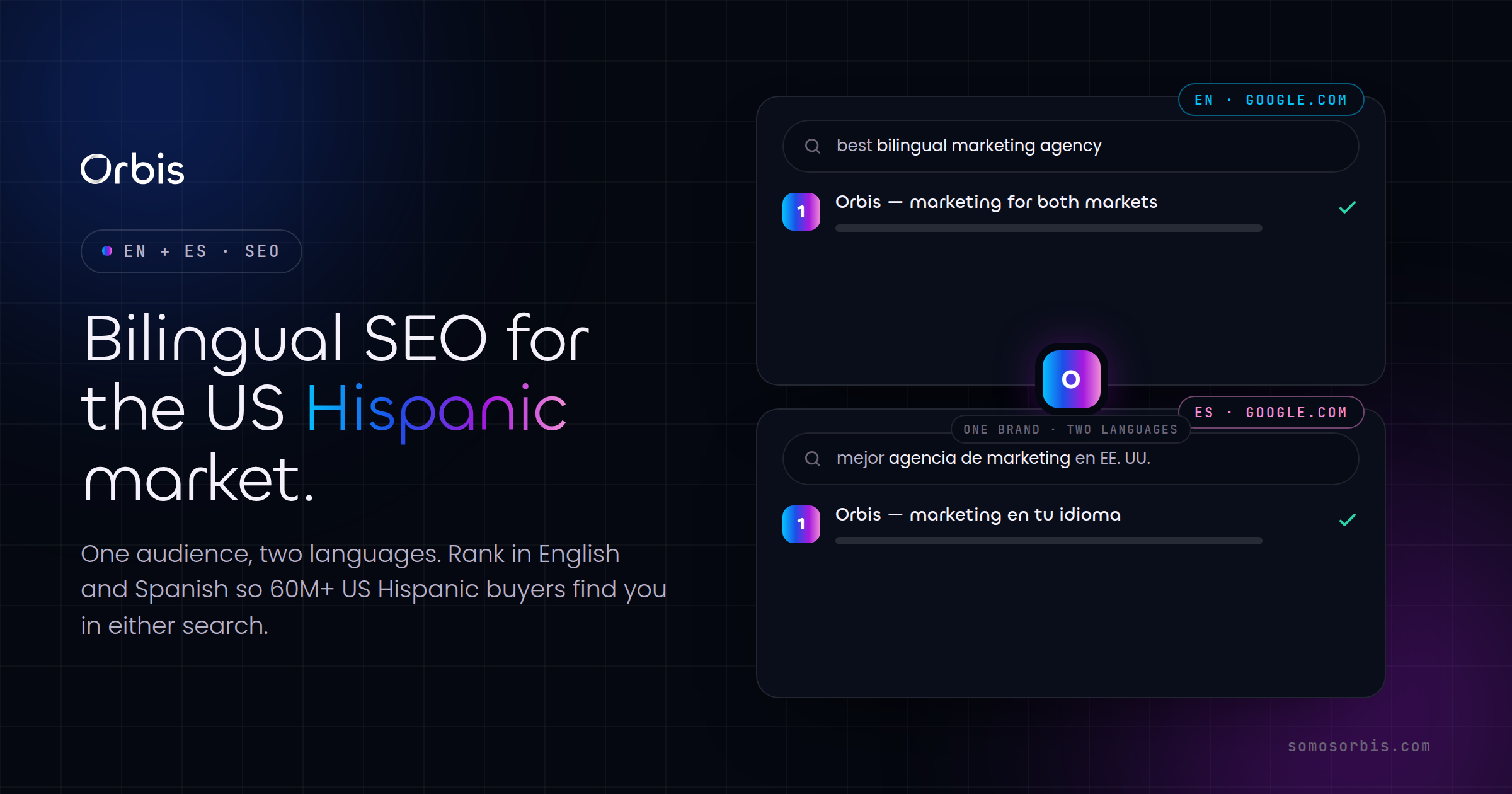
Bilingual SEO is how you show up on both sides. Done right, it doubles your qualified reach without doubling your ad spend, because organic search compounds. Done wrong, with auto-translated pages and missing technical signals, it confuses Google, splits your authority, and quietly buries you. This guide walks through the practical, citable way to reach US Hispanic audiences in both English (EN) and Spanish (ES), from keyword research to hreflang to the cultural nuance that separates a translation from a connection.
Why Bilingual SEO Matters in the US Right Now
Spanish is the second most-spoken language in the United States, and Hispanic consumers over-index on mobile search and social commerce. In metros like Miami, Houston, Los Angeles, Dallas, and Chicago, the bilingual audience is not a slice of the market, it is a large share of the local market. Yet most businesses still publish English-only and rely on Google to "figure out" Spanish queries. It will not, reliably, and your competitors who do build proper Spanish pages will outrank you for those searches.
There is also a seasonal angle that US marketers ignore at their peril. Hispanic shopping patterns are strong around Black Friday and Cyber Monday, Amazon Prime Day, back-to-school, and the early-year tax season when refunds drive big-ticket purchases. A bilingual content calendar that anticipates these moments in both languages captures intent that English-only sites leave on the table.
Bilingual SEO is also a trust signal. When a Spanish-speaking shopper lands on a page written in fluent, culturally aware Spanish, not a clumsy machine translation, they read it as respect. That perceived respect lowers bounce rates and lifts conversions, which are themselves ranking signals. The flywheel is real.
Build Your Bilingual Keyword Map First
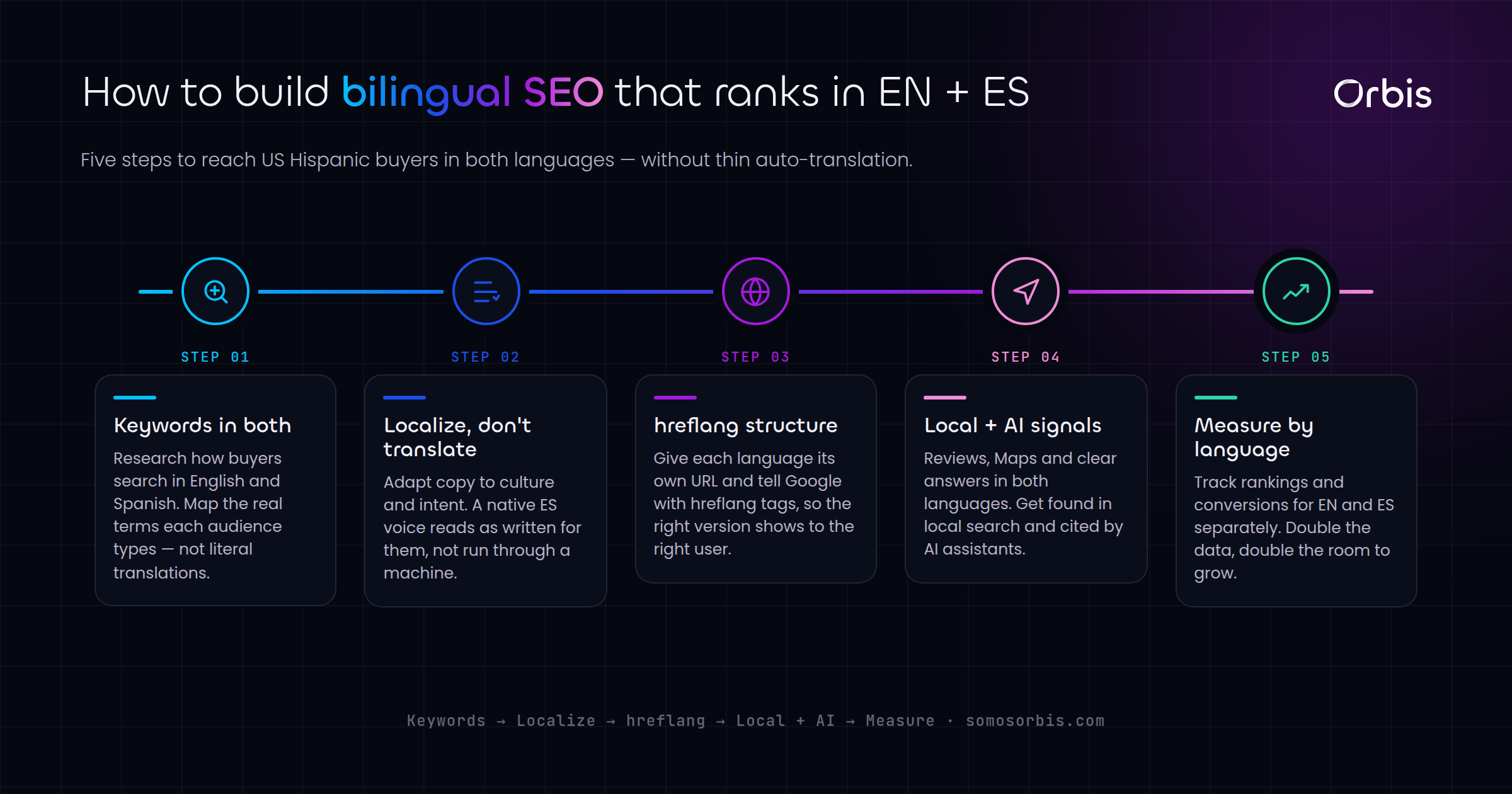
The single most common mistake we see is translating keywords word-for-word. Search intent does not translate literally. Spanish-speaking users phrase queries differently, use regional vocabulary, and frequently search in "Spanglish." Before you write a single page, build two parallel keyword maps, one for EN and one for ES, and treat them as related but independent.
Research Spanish Queries the Way People Actually Type Them
- Regional vocabulary varies. A Mexican-American audience in Dallas may search "plomero" while a Caribbean-Hispanic audience in Miami might use "fontanero." Pick the term your local audience actually uses, and validate it with search volume, not assumptions.
- Spanglish is real search behavior. Queries like "seguro de carro near me" or "doctor que habla español Chicago" are common. Build pages that naturally include these hybrid phrases instead of forcing pure Spanish.
- Accent-insensitive matching. Many users omit accents when typing on mobile. Optimize for both "seccion" and "sección" so you do not lose the un-accented majority.
- Intent can shift by language. A Spanish query may skew more toward informational, community-driven results, while the English equivalent skews transactional. Map content type to the intent behind each language, not a single template.
When a query has clear local intent, your bilingual map should feed directly into your location pages. This is where strong local SEO execution pays off, because a Spanish-language service page that also nails city, neighborhood, and "near me" signals can outrank larger national competitors who never bothered to localize.
The Technical Foundation: hreflang Done Right
If you remember one technical concept from this guide, make it hreflang. This is the HTML attribute that tells Google which language and regional version of a page to serve to which user. Get it right and Google sends Spanish searchers to your Spanish page and English searchers to your English page. Get it wrong and Google may treat your two pages as duplicate content, dilute their authority, or serve the wrong version entirely.
The Rules That Actually Prevent Problems
- Every page references itself and its alternates. Your English page must point to both the English and Spanish versions; the Spanish page must do the same. Missing the self-reference is the most common
hreflangerror. - Use the right codes. Use
en-USandes-USto target US English and US Spanish specifically. Avoid genericesif your content, currency (USD), and examples are clearly US-focused. - Add an x-default. Set an
x-defaultversion so users outside your targeted language-region combinations still land somewhere sensible. - Keep URLs consistent. Reference absolute URLs, match your canonical tags to the language version, and never point
hreflangat redirecting or 404 URLs.
Choose a URL Structure and Commit to It
You have three clean options for organizing bilingual content: subdirectories (/es/), subdomains, or separate domains. For most US businesses, language subdirectories on a single domain are the strongest choice. They consolidate domain authority, simplify analytics, and are the easiest to maintain. Whatever you choose, be consistent across the entire site, because a half-migrated structure is worse than either pure approach.
Bilingual SEO is an engineering problem before it is a content problem. If the hreflang, canonicals, and sitemap signals are wrong, even perfect translations will underperform. Fix the plumbing first. Translation Is Not Localization
Auto-translation tools have improved, but they still produce content that reads as foreign to native speakers. Worse, Google has long discouraged auto-generated and low-value translated content. The goal is localization: adapting tone, examples, cultural references, and calls to action so the page feels native, not converted.
What Localization Looks Like in Practice
- Adapt examples to the audience. A page targeting Hispanic small-business owners in Los Angeles should reference their realities, not a generic US template translated into Spanish.
- Match formality to the segment. Spanish has formal ("usted") and informal ("tú") registers. A financial services brand may lean formal; a youth-focused DTC brand may lean informal. Choose deliberately and stay consistent.
- Rewrite CTAs, do not translate them. "Get a free quote" and its Spanish equivalent should both feel persuasive in their own language, not like a literal swap.
- Localize trust signals. Showcase Spanish-language reviews, bilingual support hours, and team members who speak Spanish. These details convert.
For brands operating across many cities and both languages at once, the complexity multiplies fast. That is where a disciplined approach to international and multilingual SEO keeps your architecture clean, your hreflang correct, and your content genuinely localized rather than mechanically translated across dozens of pages.
Content Strategy: Mirror, Don't Clone
A strong bilingual content program does not simply duplicate every English article in Spanish. Some topics deserve a full parallel page; others deserve a uniquely Spanish-first piece that addresses questions your English audience never asks. Build your editorial calendar around three buckets.
The Three Content Buckets
- Parallel pages. Core service and product pages should exist in both EN and ES, properly linked with
hreflang. These are your conversion workhorses. - Spanish-first pages. Some search demand exists almost entirely in Spanish, for example community-specific guidance or questions about navigating US systems. Create these natively in Spanish.
- English-first pages. Equally, some technical or industry topics over-index in English. Do not force a Spanish version that no one searches for.
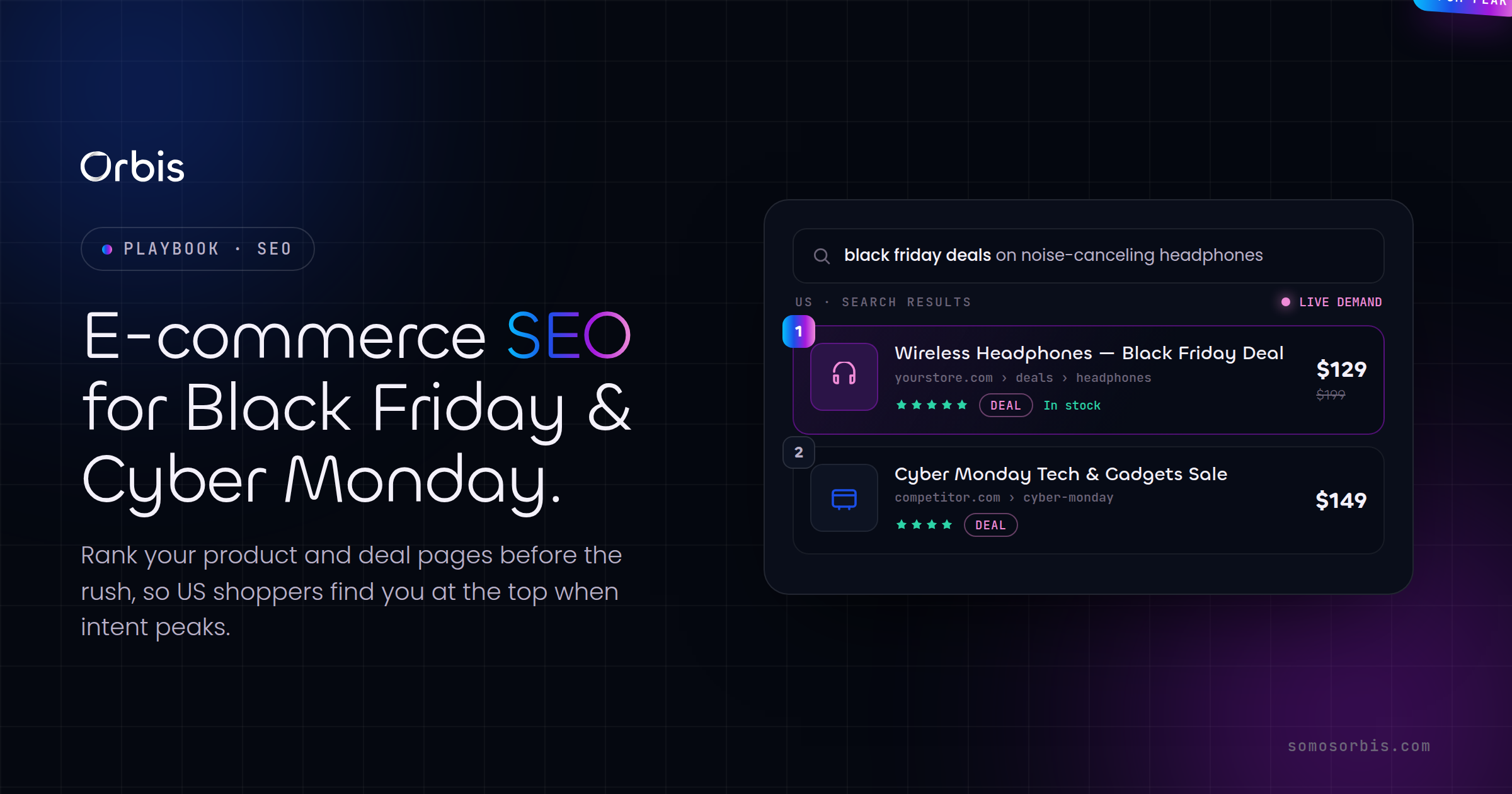
Tie this calendar to US seasonality in both languages. Publish Black Friday and Cyber Monday buying guides, Prime Day deal roundups, back-to-school checklists, and tax-season financial guides in EN and ES, timed to the weeks when intent peaks. Bilingual seasonal content is one of the highest-ROI plays available because the demand is predictable and most competitors only cover one language.
Local SEO Is Where Bilingual Wins Compound
For most US businesses, the bilingual opportunity is overwhelmingly local. A bakery in Miami, a clinic in Houston, a law firm in Chicago: their Spanish-speaking customers search locally, often on mobile, often with "near me" or city modifiers. Your Google Business Profile, your reviews, and your location pages all need bilingual attention.
- Optimize your Business Profile in both languages. Respond to Spanish reviews in Spanish, post updates bilingually, and make sure your categories and services reflect how both audiences search.
- Build bilingual location pages. Each location should have a clean, localized page in both languages with consistent NAP (name, address, phone) data.
- Earn local citations and reviews. Encourage Spanish-language reviews actively. They rank, they build trust, and they signal relevance to a bilingual audience.
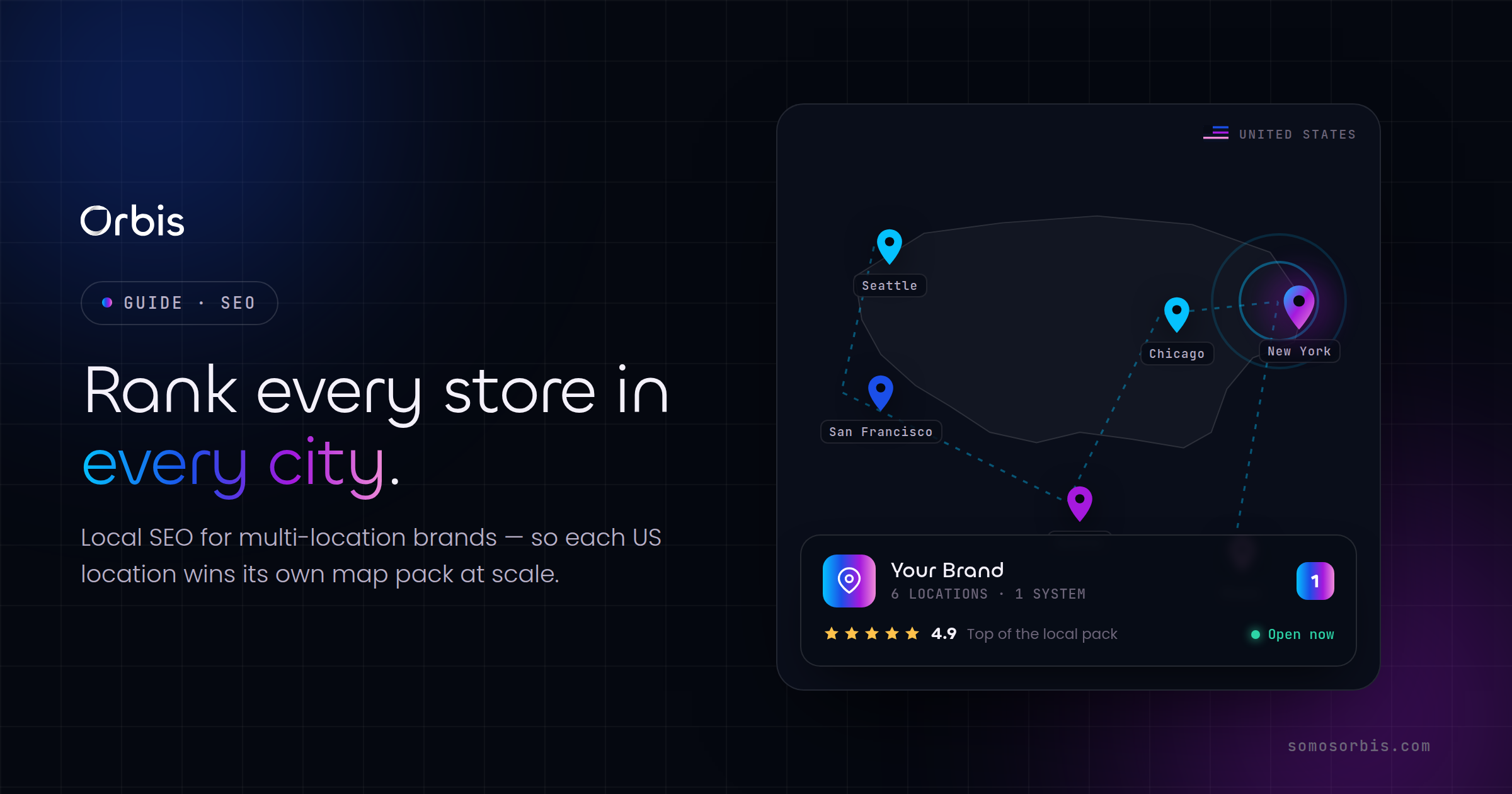
If you manage more than a handful of locations, the bilingual challenge becomes a scale challenge. Our deep dive on local SEO for multi-location brands across US cities covers how to keep dozens of pages consistent, correctly linked, and locally relevant, all of which apply directly when each location also needs a Spanish counterpart.
Measurement, Privacy, and Staying Compliant
Track EN and ES performance separately. Segment your analytics by language path, monitor rankings for both keyword maps, and watch language-specific conversion rates. A page that ranks well in English but converts poorly in Spanish usually signals a localization gap, not a traffic problem.
As you collect data from bilingual audiences, respect US privacy norms. Honor opt-out and "do not sell or share" preferences, present consent and privacy choices in the user's language, and keep your data practices transparent. Following current privacy regulations is not just a legal box to check; bilingual users who see their privacy respected in their own language convert at higher rates. Build your measurement and consent flows to meet the normativa vigente from day one rather than retrofitting them later.
A Practical Rollout Plan
You do not need to translate your entire site overnight. Sequence the work so each phase delivers measurable lift before you expand.
- Phase 1: Build your bilingual keyword maps and identify the 10 to 15 highest-intent pages worth localizing first.
- Phase 2: Lock the technical foundation: URL structure,
hreflang, canonicals, and a clean bilingual sitemap. - Phase 3: Localize, do not translate, those priority pages, with native-quality Spanish and adapted CTAs.
- Phase 4: Layer in bilingual local SEO and a seasonal content calendar tied to US shopping moments.
- Phase 5: Measure by language, fix localization gaps, and scale to the next tier of pages.
This phased approach is how documented processes turn bilingual SEO from a one-time project into a revenue engine that compounds quarter after quarter.
Related Guides
Bilingual SEO sits inside a larger search strategy. For the full framework, start with the complete SEO guide for US businesses in 2026, then go deeper on multi-location execution with local SEO for multi-location brands across US cities. Together they give you the pillar strategy and the local playbook that bilingual content amplifies.
Ready to Reach Both Audiences?
The US Hispanic market is too large, too digital, and too underserved to leave to chance or to auto-translation. Businesses that build proper bilingual SEO, real keyword research, correct hreflang, true localization, and bilingual local presence, capture demand their competitors cannot even see. Orbis brings 15+ years of experience, Google Partner status, and a 4.9-star rating across 58 reviews to exactly this kind of work, with documented processes and revenue engineering built in.
If you are ready to show up in both English and Spanish across markets like Miami, Houston, Los Angeles, Dallas, and Chicago, let our team build your bilingual foundation. Start with a focused local SEO engagement and reach the customers already searching for you in two languages.