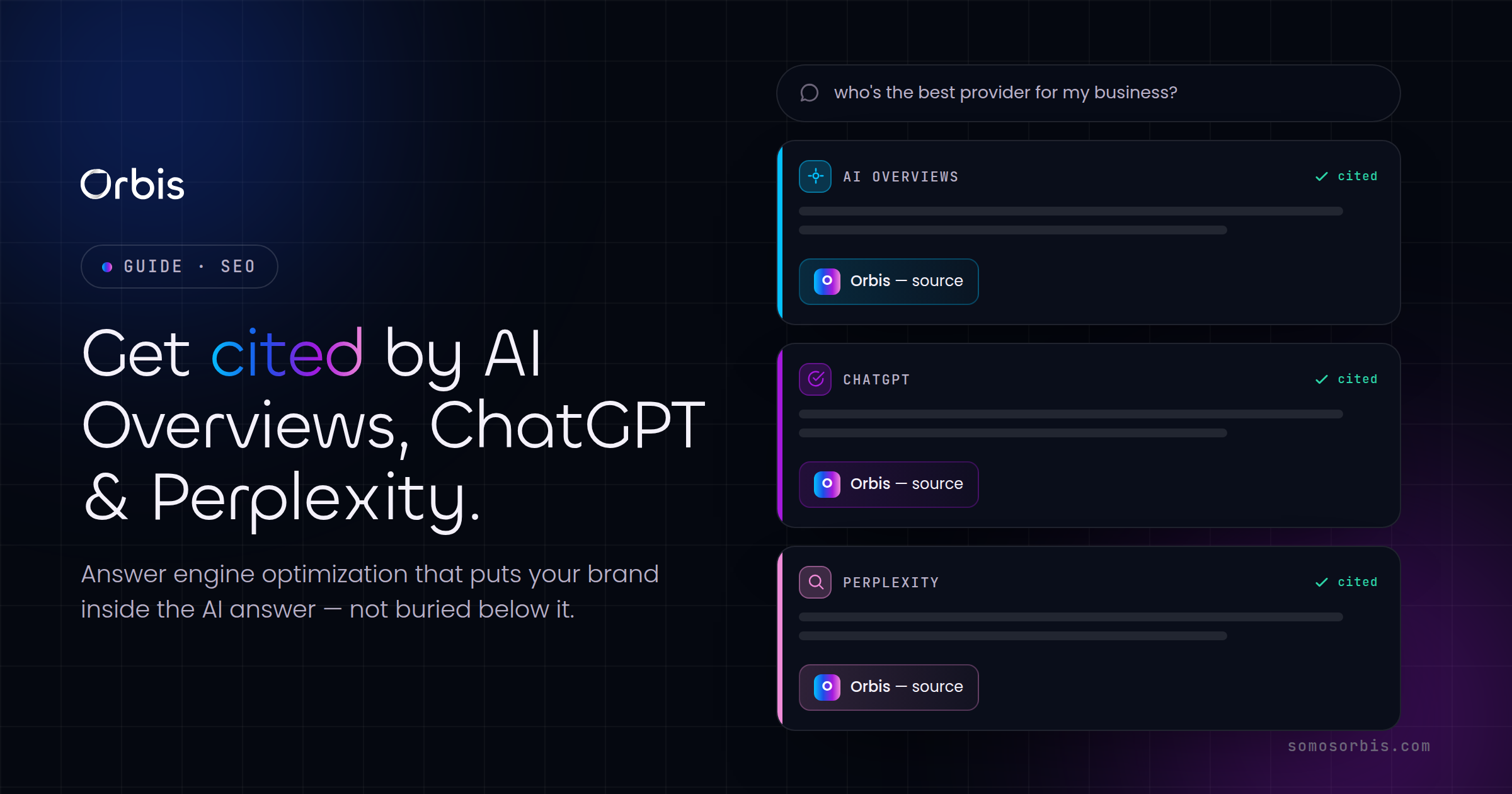
Answer Engine Optimization (AEO) is the practice of structuring your content so AI assistants like Google AI Overviews, ChatGPT, and Perplexity quote your brand directly in their answers. In the United States, AI Overviews now appear in roughly 45% of Google searches, and a single zero-click answer can absorb the demand that used to send dozens of visitors to your site. If your business in New York, Los Angeles, Chicago, Miami, Dallas, or Houston is not being cited, a competitor is taking that visibility instead.
This guide is written for US marketers, founders, and in-house teams who already understand traditional SEO and want a clear, actionable system for getting cited by AI. We will not invent statistics or promise rankings. We will show you how to make your content extractable, citable, and present in the places AI systems actually look. This article is a satellite of our pillar resource, The Complete SEO Guide for US Businesses in 2026, and pairs closely with our deep dive on B2B SEO Strategy for US SaaS and Service Companies.
What is AEO and how is it different from SEO?
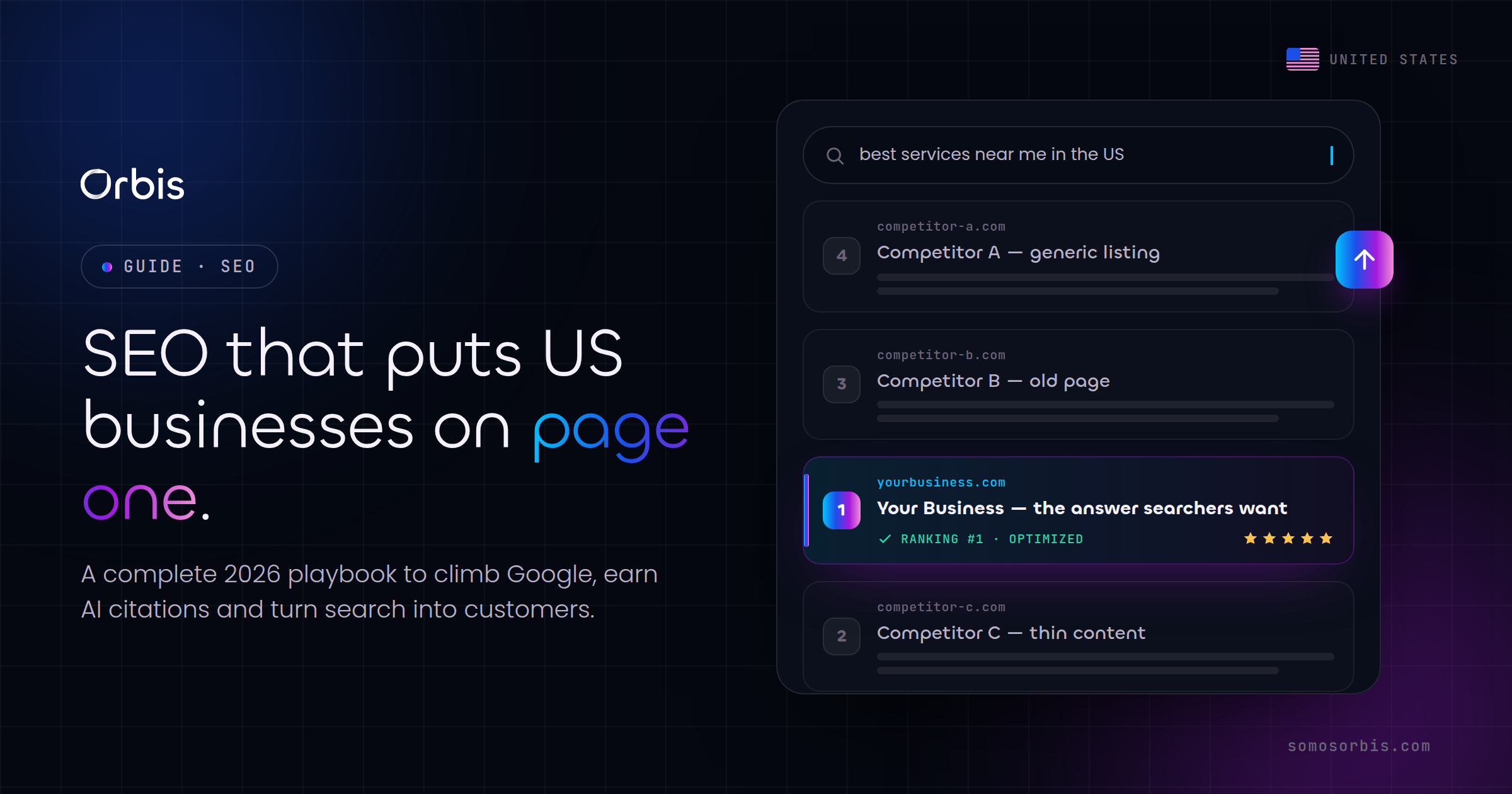
Answer Engine Optimization is the discipline of getting your content cited inside AI-generated answers rather than just ranked on a results page. Traditional SEO earns you a blue link in position one. AEO earns you a sentence inside the answer an AI gives the user, often with a citation back to your domain. The two are related, but they are not the same skill.
The critical shift is this: in classic search, you need to rank on page one to get clicks. In AI search, a well-structured page can be cited even when it ranks on page two or three, because AI systems select passages based on clarity, structure, and authority, not only on rank position. That is good news for challenger brands in competitive US markets who cannot outspend incumbents on links alone.
Why AEO matters for US businesses right now
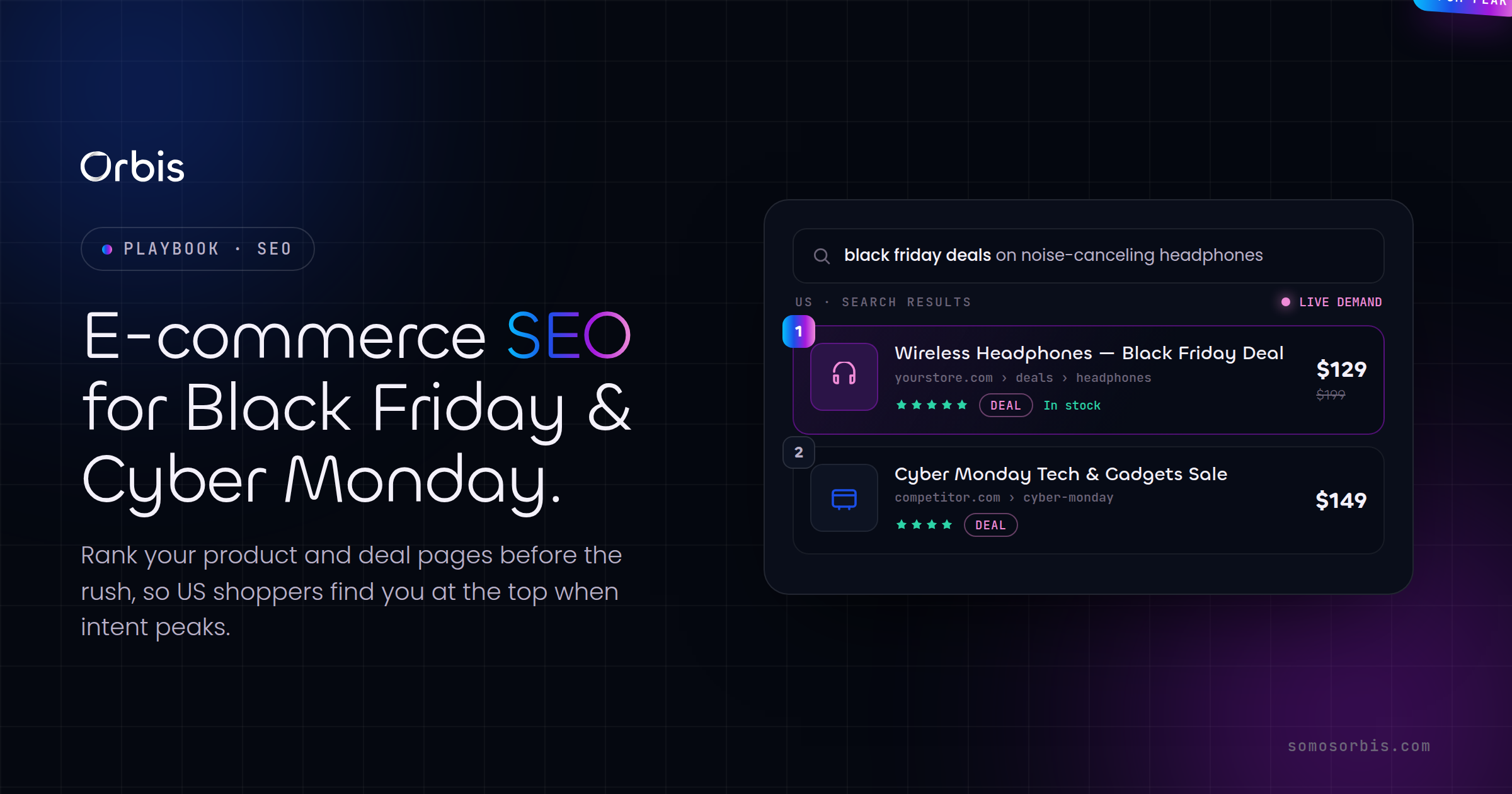
US consumers and B2B buyers increasingly start their research inside ChatGPT, Perplexity, Gemini, and Google AI Overviews. During high-intent moments such as Black Friday and Cyber Monday, Amazon Prime Day, back-to-school, and tax season, shoppers ask AI assistants direct questions like "best CRM for a small Dallas agency" or "how to reduce cart abandonment before Cyber Monday." If your content answers that question in an extractable format, you can be the brand the AI names. If it does not, you are invisible at the exact moment of decision.
How AI answer engines choose their sources
Each major AI platform selects sources a little differently, and understanding the differences helps you prioritize where to invest.
- Google AI Overviews: Summarizes top-ranking pages. Citations correlate strongly with traditional rankings, so your existing SEO foundation matters here.
- ChatGPT with search: Pulls from a wider range of pages, not just the top three results. Well-structured page-two content has a real shot.
- Perplexity: Always cites sources with links and favors authoritative, recent, well-structured content.
- Gemini: Pulls from the Google index plus the Knowledge Graph, so entity clarity matters.
- Microsoft Copilot: Bing-powered, drawing from the Bing index and authoritative sources.
The common thread across all five is that they reward clear structure, demonstrated authority, and freshness. Optimize for those three and you improve across every engine at once.
The three pillars of AEO
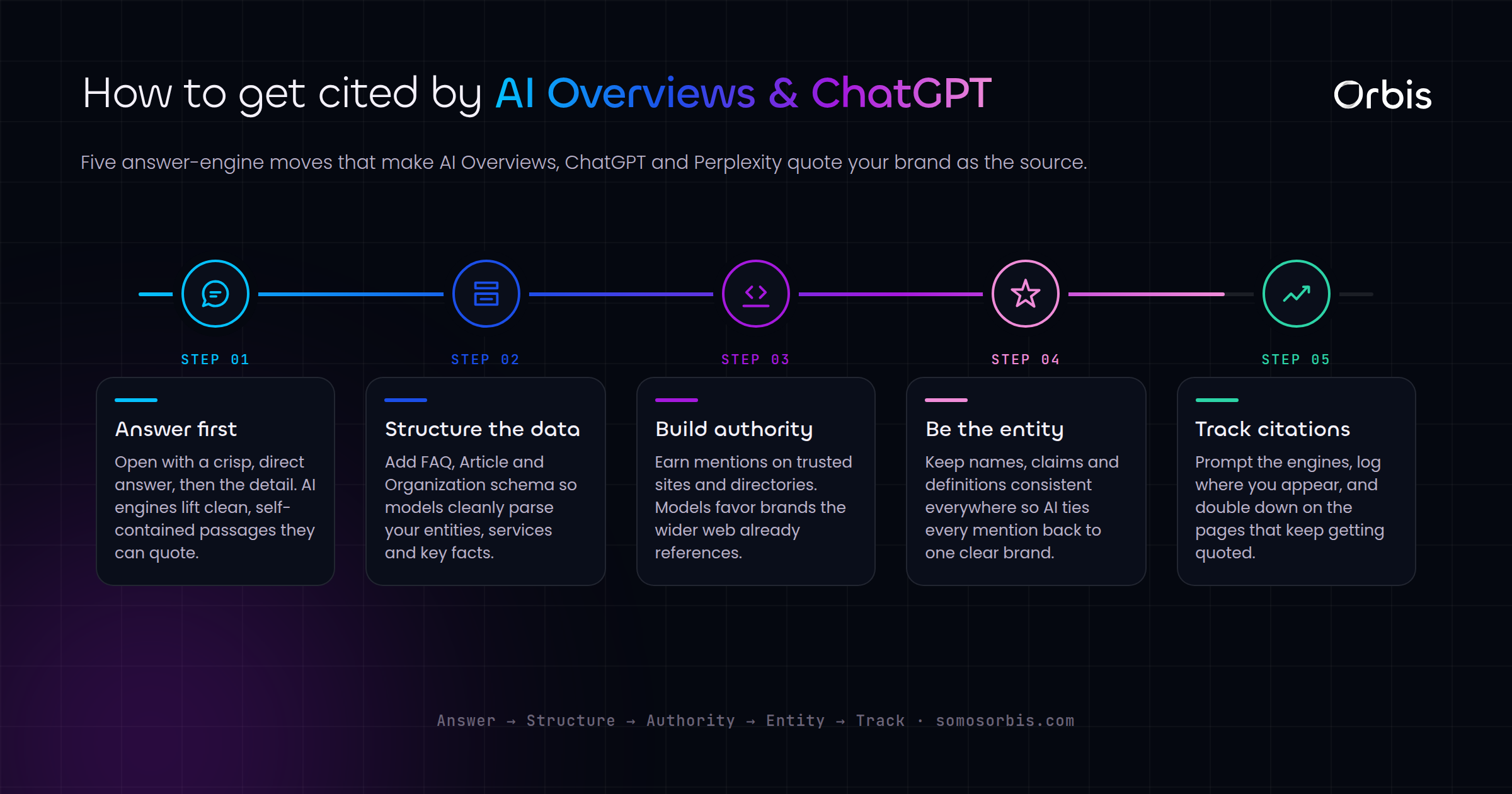
Everything that works in answer engine optimization fits into three pillars: make your content extractable, make it citable, and be present where AI looks. Work through them in order.
Pillar 1: Structure so AI can extract your answer
AI systems extract passages, not whole pages. Every important claim should read as a self-contained statement that still makes sense when lifted out of its surrounding paragraphs. Bury your answer three paragraphs down and you will not get cited.
Apply these structural rules to every page you want cited:
- Lead every section with a direct answer. Open with the definition or conclusion, then explain. Do not make the reader, or the model, dig for it.
- Keep key answer passages to 40 to 60 words. That is the sweet spot for snippet extraction across AI Overviews and Perplexity.
- Write headings the way people phrase questions. "How much does a website redesign cost in the US?" beats "Pricing considerations."
- Use tables for comparisons. A clean "Tool A vs Tool B" table gets cited far more than the same information buried in prose.
- Use numbered lists for processes. Step-by-step formats map directly onto "how to" queries.
- Add an FAQ block. Natural-language questions with tight 40-to-60-word answers are among the most cited formats.
For a Miami e-commerce brand preparing for the holiday rush, that means a page titled "How to prepare your Shopify store for Black Friday" with a numbered checklist and an FAQ, not a meandering essay. The structure is what makes it quotable.
Pillar 2: Authority so AI trusts your content enough to cite it
AI systems prefer sources they can trust, and trust is built from specific, verifiable signals. Research on generative engine optimization presented at KDD 2024 found that adding cited sources, statistics, and expert quotations measurably increased how often content was surfaced by answer engines, while keyword stuffing actively reduced visibility.
Build citation-worthiness with these moves:
- Cite authoritative sources with links. Reference original research and primary data, not third-hand summaries.
- Add specific statistics with dates. "Our process documentation reduced onboarding time" is weak. A dated, specific figure from a credible source is citable.
- Include expert quotations with names and titles. "According to [name], [title] at [organization]" framing reads as authority to both humans and models.
- Write in an authoritative, fluent tone. Clarity plus statistics is the strongest combination the research identified.
- Use correct domain terminology. Technical precision signals expertise; vague marketing language does not.
At Orbis we lean on real, citable proof rather than invented numbers: Google Partner status, a 4.9-star rating across 58 reviews, more than 500 clients served, and over 15 years of experience. Real proof points are the kind of detail AI engines reward, because they are verifiable. Never fabricate metrics to chase a citation; a model that cross-checks a fake stat will simply stop trusting your domain.
Pillar 3: Presence so AI finds you where it looks
AI systems do not only cite your website. They frequently cite where your brand appears across the wider web. Studies of ChatGPT citations show that a meaningful share come from third-party sources such as Wikipedia and Reddit rather than brand-owned domains.
Expand your presence with these actions:
- Keep any Wikipedia presence accurate and current, since it is one of the most-cited sources.
- Participate authentically in relevant Reddit and Quora communities where your buyers ask questions.
- Earn placement in industry roundups, comparison articles, and review platforms like G2 and Capterra for B2B.
- Publish YouTube content for key how-to queries, which Google AI Overviews cite often.
- Maintain consistent, accurate profiles across the directories your category trusts.
Freshness and the date signal
AI systems weight recency heavily. Undated content loses to dated content, and content last touched two years ago loses to content refreshed last quarter. Display a visible "last updated" date, and on competitive US topics, refresh at least quarterly. Tie refreshes to US seasonality: update your holiday commerce guides before Black Friday and Cyber Monday, your financial content before tax season, and your retail content before back-to-school and Amazon Prime Day. A current-year reference and a recent statistic both reinforce that your page is alive.
Schema and machine-readable files
Structured data helps AI understand what your content is about. The schemas that matter most for AEO are Article or BlogPosting for posts, FAQPage for question blocks, HowTo for step-by-step guides, Product for product pages, and Organization for entity recognition. Pages with proper schema show meaningfully higher AI visibility because the model receives explicit, labeled context instead of having to infer it.
Two machine-readable files are increasingly worth adding to your site root. An llms.txt file gives AI systems a quick overview of what you do, who you serve, and links to your key pages. A pricing.md or pricing.txt file exposes your plans in plain, parseable text. This matters more every quarter: AI agents are starting to evaluate and shortlist tools on behalf of US buyers, and an agent that cannot read pricing locked behind JavaScript or a "contact sales" wall will simply recommend a competitor it can parse.
Reach the US Hispanic market in both languages
The US Hispanic market is large, growing, and increasingly served by AI assistants that answer in Spanish as fluently as in English. If your audience searches in both languages, your AEO strategy should too. Publish parallel EN and ES versions of your highest-intent content, mark up language with correct hreflang signals, and make sure your Spanish content is genuinely written for native speakers, not machine-translated. A bilingual brand that answers "mejor agencia de marketing en Houston" with the same authority it answers the English equivalent doubles its surface area for AI citation. Respect US privacy norms throughout: collect data transparently, honor opt-outs, and keep your consent and data-handling language clear in both languages.
A practical AEO workflow you can run this quarter
Here is a sequence any US marketing team can execute without specialized tooling:
- Pick 15 to 20 priority queries. Mix "what is," "best," "how to," and "X vs Y" formats around your highest-value services.
- Test each query in ChatGPT, Perplexity, and Google. Record whether you are cited, who is cited instead, and which of their pages won.
- Audit your matching pages for extractability. Does each lead with a direct answer? Are there tables, lists, and an FAQ? Is there a visible date?
- Add authority signals. Insert dated statistics, cited sources, and named expert quotes where they are missing.
- Confirm AI crawler access. Check that your robots.txt does not block GPTBot, PerplexityBot, ClaudeBot, Google-Extended, or Bingbot, or those engines cannot cite you.
- Implement schema. Add Article, FAQPage, and HowTo markup to the relevant pages.
- Re-test monthly. Track citation share month over month and double down on the formats that win.
Common AEO mistakes to avoid
- Treating AEO as separate from SEO. Strong traditional SEO is the foundation; AEO adds structure and authority on top.
- Writing for the algorithm instead of the reader. Content that reads like it was built to game a model gets neither cited nor converted.
- Keyword stuffing. Unlike in classic SEO, where it is merely ineffective, stuffing actively reduces AI visibility.
- Gating your best content. AI cannot cite what it cannot access. Keep your most authoritative pages open.
- Hiding pricing. Opaque or JavaScript-only pricing gets filtered out of AI-mediated buying journeys.
- Inventing data. Fabricated metrics destroy the trust that earns citations in the first place.
- Forgetting to measure. Check your AI visibility at least monthly; you cannot improve what you do not track.
How this connects to your broader SEO strategy
AEO is not a standalone tactic; it is the AI layer on top of disciplined search work. Your technical foundation, content depth, and link authority all feed your citation rate. To build that foundation, start with our pillar resource, The Complete SEO Guide for US Businesses in 2026, which frames the full system. If you sell software or services to other businesses, pair this with B2B SEO Strategy for US SaaS and Service Companies to align your AEO work with how US buyers actually research and purchase.
Get cited by AI with a partner that builds it into your process
Getting cited by AI Overviews, ChatGPT, and Perplexity is not luck. It is the predictable result of extractable structure, real authority signals, and disciplined presence across the web, all maintained on a schedule that tracks US buying seasons. That is exactly the kind of documented, repeatable system Orbis builds for clients through our Business Assurance approach: documented processes, revenue engineering, and compliance by design with current privacy norms.
If you want a team that engineers your content to be the answer AI gives, explore our AEO and AI SEO service and let's map your highest-value queries together. With Google Partner status, a 4.9-star rating across 58 reviews, more than 500 clients, and over 15 years of experience, we will help your brand show up where US buyers are now asking their questions.