
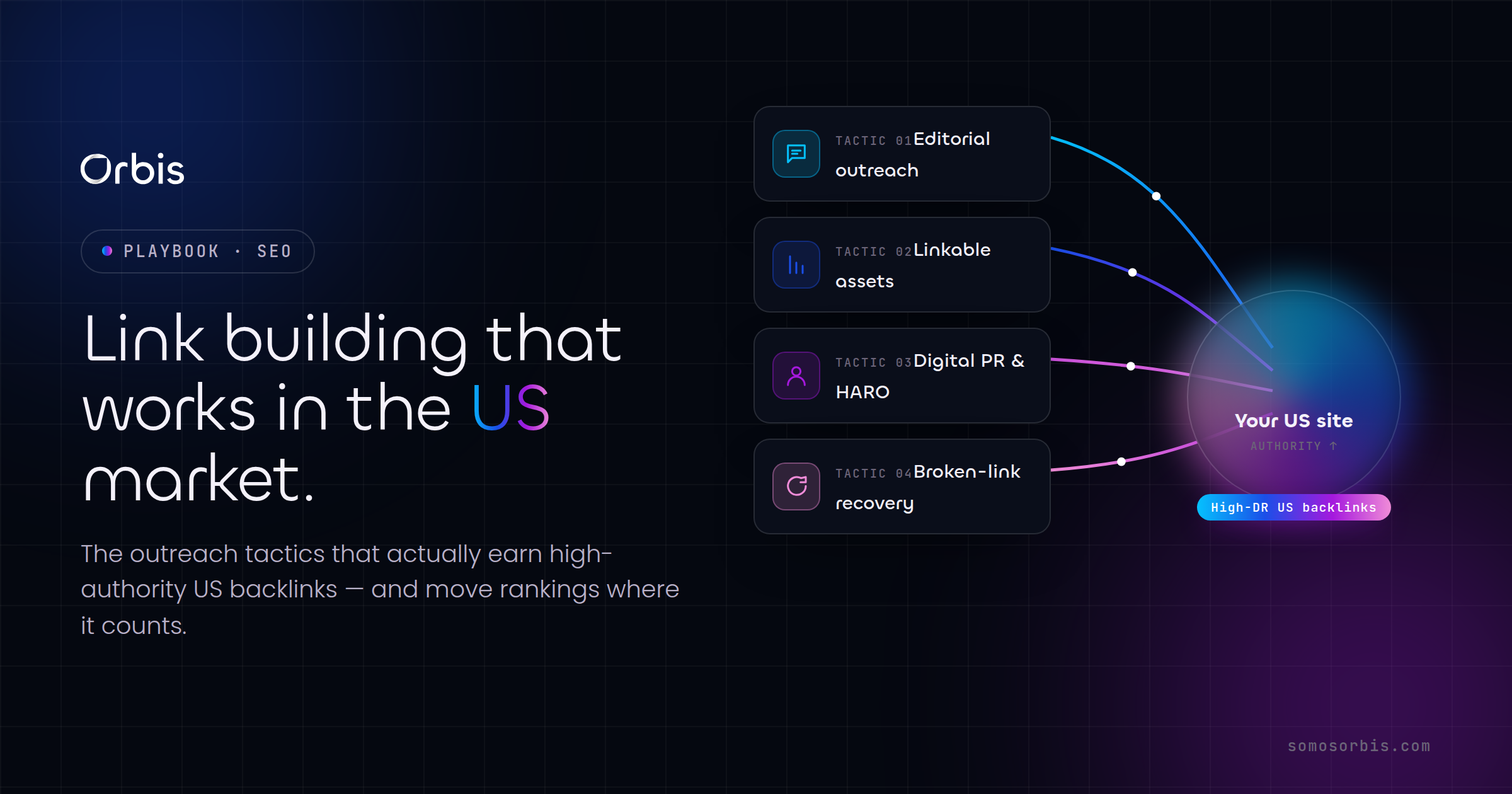
Link building is still the part of SEO that separates pages that rank from pages that just exist. In the US market, where the competition for terms like "personal injury lawyer Houston" or "Black Friday deals" is brutal, your content quality and technical setup get you to the starting line. Links are what move you up the field. But the playbook that worked in 2015 will get you penalized in 2026. Buying packages of spammy links, guest-posting on private blog networks, and stuffing exact-match anchors into low-quality directories are fast ways to torch a domain you spent years building.
This guide covers the link building strategies that actually move rankings for US businesses right now: digital PR, original data studies, strategic local partnerships, and the unglamorous relationship work that compounds over time. No shortcuts, no schemes, and nothing that puts your domain at risk when the next algorithm update lands.
Why Link Building Still Matters in 2026
Google has spent years telling people that links matter less than they used to. That is partly true and mostly misleading. Links remain one of the strongest signals of authority and trust, and the rise of AI-generated answers has actually raised the stakes. When an AI assistant decides which sources to cite for a query about "best CRM for small business" or "how to file taxes as a freelancer," it leans heavily on the same authority signals that traditional search uses. A page with genuine editorial links from respected US publications gets surfaced. A page with none stays invisible.
There is a second reason links matter more than ever: they are hard to fake at scale anymore. AI can spin up a thousand mediocre articles in an afternoon. It cannot make a journalist at a Dallas business weekly want to cite your research, or convince a Chamber of Commerce in Miami to link to your local guide. That difficulty is exactly what makes earned links valuable. Scarcity creates signal.
What Counts as a Good Link in the US Market
Not every link helps. Before you chase a placement, weigh it against a few practical filters:
- Relevance. A link from a marketing blog to your marketing agency is worth more than a link from an unrelated pet-supply site, even if the pet site has a higher domain rating.
- Editorial intent. Did a human choose to link to you because your content was useful? Editorial links carry weight. Links you placed yourself in footers, signatures, or comment sections do not.
- Traffic and audience. A link on a page that real US readers actually visit passes referral traffic and stronger signals than a link buried on an orphaned page no one sees.
- Local trust. For a business serving New York, Los Angeles, or Chicago, a link from a recognized local institution, a university, a newspaper, or a regional trade association is gold for both rankings and credibility.
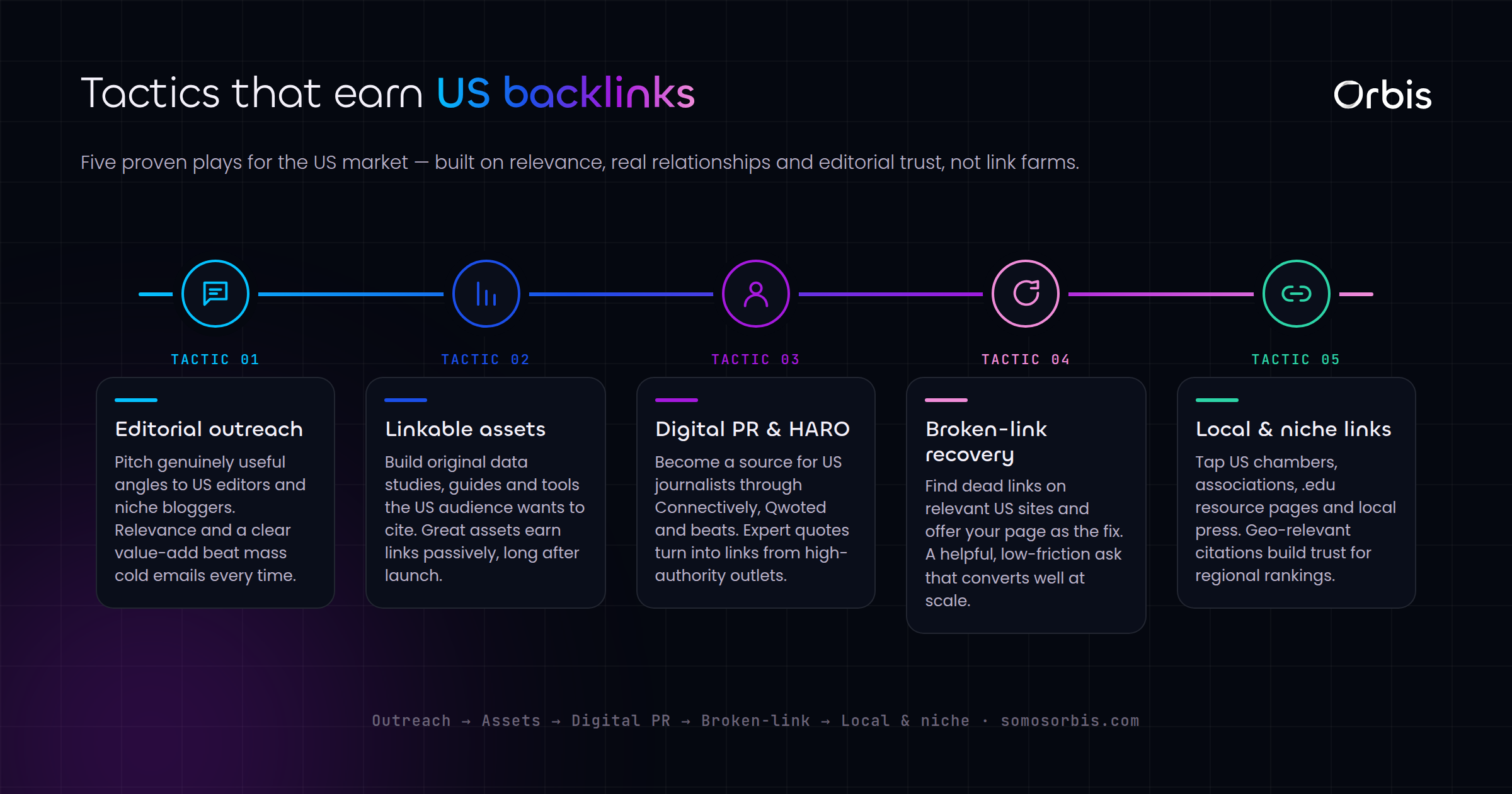
Strategy 1: Digital PR That Earns Coverage
Digital PR is the highest-leverage link building tactic available to US businesses today. The idea is simple: create something newsworthy, pitch it to journalists and editors, and earn coverage that includes a link back to you. The execution is where most teams fall down.
US newsrooms are stretched thin and flooded with pitches. To break through, your story needs a real hook tied to something people care about. Seasonality is your friend here. A retail brand can pitch a survey about Black Friday and Cyber Monday spending intentions in early October, right when business reporters are hunting for holiday-shopping angles. A financial app can release data about how Americans handle tax season in February. A back-to-school product can offer regional spending breakdowns across major metros in late July. Tie your story to a calendar moment and your relevance writes itself.
How to Run a Digital PR Campaign
- Find a data angle. Reporters cite numbers. Survey your customers, analyze your internal data (anonymized and aggregated), or commission a small panel study. "62% of Los Angeles shoppers plan to spend less this Black Friday" is a headline. "We think shopping is changing" is not.
- Build the asset. Package the findings into a clean, linkable page on your own site with charts, a clear methodology, and quotable stats. This page is what journalists will link to.
- Write a tight pitch. Two or three sentences. Lead with the most surprising stat, name the angle, and offer an exclusive or a spokesperson. Personalize it to the reporter's beat.
- Target the right outlets. National trade publications, regional business journals in Dallas, Houston, and Miami, and niche industry newsletters all count. Mid-tier outlets often link more freely than the biggest names.
- Follow up once, politely. A single well-timed follow-up doubles response rates. More than that and you become a nuisance.
One strong digital PR campaign can earn a dozen editorial links from real publications, each one worth more than hundreds of low-quality directory submissions. This is the kind of work that fits inside a serious link building program rather than a one-off stunt.
Strategy 2: Original Data Studies and Research
If digital PR is the engine, original research is the fuel. The single most reliable way to attract links over time is to become the source other people cite. When you publish a study, a benchmark report, or an index that your industry needs, links accumulate for years with no further outreach because writers keep discovering and referencing it.
You do not need a massive budget. Useful research can come from:
- Customer surveys. Poll a few hundred customers or run a panel about behavior, spending, or attitudes in your category.
- Internal product data. Anonymized and aggregated, your own usage data often reveals trends nobody else can report. A scheduling app knows when Americans actually book appointments. A payments tool knows real average order values by region.
- Public data analysis. Government datasets, census figures, and public filings are free. Turning raw data into a clean, readable analysis with a fresh angle is genuine value.
When you handle any customer data for research, respect US privacy expectations. Keep it aggregated, get consent where appropriate, and never expose individuals. Treating people's data with care is not just compliance, it protects the trust that makes your brand worth linking to in the first place. Build your processes around privacy by design and you avoid problems before they start.
Make Your Research Linkable
A study only earns links if people can use it easily. Give every key statistic its own headline and chart so a writer can grab one number without reading the whole report. Include a clear methodology so the data feels credible. Add an embeddable graphic or a "cite this study" line with pre-written attribution. The less friction between your data and a journalist's deadline, the more links you earn.
Strategy 3: Local and Regional Partnerships
For businesses serving specific US cities, local link building is one of the most underrated tactics there is. These links are highly relevant, hard for competitors to replicate, and they reinforce the local trust signals that help you rank in map packs and "near me" searches.
Productive local link sources include:
- Chambers of Commerce and trade associations. Membership in a Chicago or Miami business association usually comes with a directory listing and a link from a trusted local domain.
- Local sponsorships. Sponsoring a youth sports team, a community festival, or a charity 5K in your city often earns a link from the organizer's site, plus genuine goodwill.
- Universities and schools. Offering a scholarship, an internship program, or a guest workshop can earn a link from an .edu domain, which carries real weight.
- Local news and event calendars. Hosting an event, opening a location, or hiring locally gives reporters and community calendars a reason to mention you.
Reaching the US Hispanic Market
The US Hispanic market is one of the fastest-growing audiences in the country, and most competitors ignore the link building opportunities inside it. Bilingual content opens a second front. A Spanish-language guide that serves Hispanic communities in Los Angeles, Houston, or Miami can earn links from Spanish-language media outlets, community organizations, and bilingual influencers who rarely get pitched. Publishing genuinely useful EN/ES resources, and partnering with Hispanic chambers of commerce and cultural organizations, builds a link profile your English-only competitors cannot match. This is both a ranking advantage and a real way to serve a large, underserved audience.
Strategy 4: Relationship-Driven Outreach
Behind every great link is usually a relationship. The brands that win at link building over the long run are the ones that treat outreach as relationship building, not transaction hunting. That means engaging with journalists and creators before you need something, sharing their work, offering expert commentary on short notice, and being genuinely useful.
A few approaches that work without crossing into spam:
- Expert source platforms. Respond to reporter queries with sharp, quotable answers. Fast, specific responses from a credible expert get used and linked.
- The "unlinked mention" sweep. Find places that already mention your brand or research without a link and politely ask them to add one. These are the easiest links you will ever earn because the relationship already exists.
- Resource-page outreach. Identify "best resources" or "tools we recommend" pages in your niche and pitch your genuinely useful asset. Relevance and quality decide whether it lands.
- Co-marketing with partners. Partner with complementary, non-competing businesses on joint guides, webinars, or studies. Each partner links to the shared asset and promotes it to their audience.
Tactics to Avoid
Knowing what not to do is as important as knowing what to do. Each of these can trigger a manual penalty or get your links discounted, wiping out months of progress:
- Buying links in bulk. Paid links that pass authority violate Google's guidelines. The short-term bump is not worth the long-term risk.
- Private blog networks. Networks of fake sites built to sell links are a known target for algorithmic and manual action.
- Exact-match anchor spam. A natural link profile uses varied, contextual anchor text. A hundred links all reading "best SEO agency Dallas" is a footprint that screams manipulation.
- Low-quality directory dumps. Submitting to hundreds of generic, unmoderated directories adds noise and risk, not authority.
- Comment and forum spam. Dropping links in comment sections and forum signatures is ignored at best and harmful at worst.
The goal is a link profile that looks the way it would if you had simply done great work and earned attention, because that is exactly what you did.
How to Measure Link Building Success
Links are a means, not an end. Track the metrics that connect link building to business outcomes rather than vanity counts. Watch referring domains over time, since the number of unique sites linking to you matters more than raw link totals. Monitor the keyword rankings for the pages you are building links to, and watch for referral traffic from your placements. Most importantly, tie it back to leads and revenue. A campaign that earns ten links and moves a money keyword from page two to position three is worth more than one that earns a hundred links to a page nobody converts on.
Document your process so it is repeatable. The teams that win treat link building as an engineered, ongoing program with clear targets and quality controls, not a series of random acts. Consistency and documented processes are what turn scattered effort into compounding authority.
Putting It All Together
Sustainable link building in the US market comes down to four things done consistently: earn coverage through digital PR tied to real US moments like Black Friday and tax season, become a citable source with original research, build relevant local and bilingual partnerships in the cities you serve, and invest in relationships instead of schemes. Skip the shortcuts that put your domain at risk. The slow way is the fast way, because it compounds and it survives every algorithm update.
If you want to go deeper on the foundations, start with our SEO guide for US businesses in 2026, which covers the full strategy these links plug into. If you sell to other businesses, our breakdown of B2B SEO strategy for US SaaS shows how authority building works when your buyers are companies, not consumers.
Ready to build links that actually move rankings without risking your domain? Explore our link building services and let our team design a digital PR and authority program built on documented processes, real US relationships, and measurable results. No spam, no schemes, just the kind of work that earns its place.