
For US retailers, the product feed is the real campaign. You can have the right budget, the right bids, and a clean account structure, but if your feed is messy, Google Shopping will quietly cap your impression share and hand the shelf space to a competitor with cleaner data. The auction does not reward the best price as often as it rewards the clearest, most complete product information matched to a shopper's query. That is true in New York and Los Angeles, and it is just as true for a mid-size store shipping out of Dallas or Houston.
This guide walks through the feed-level work that moves the needle: product titles, GTINs and identifiers, USD pricing rules, attribute completeness, and the seasonal adjustments that matter for US peak windows like Black Friday, Cyber Monday, Amazon Prime Day, back-to-school, and tax season. The goal is practical: fewer disapprovals, higher impression share, and more qualified clicks during the moments when US shoppers are actually buying.
Why the feed decides your Shopping ceiling
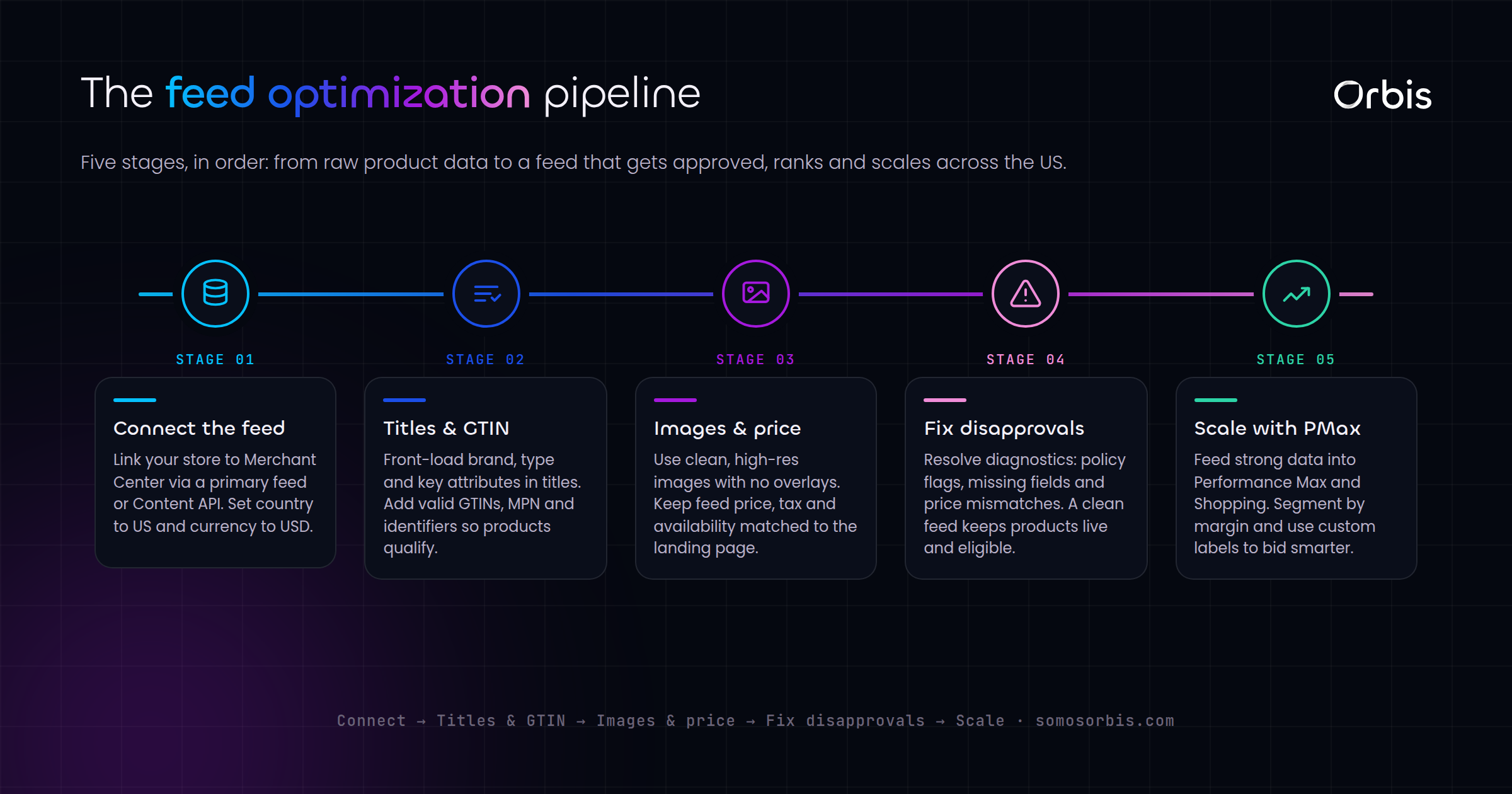
Google Shopping does not read your landing page the way it reads your feed. The feed is the source of truth. When a shopper in Chicago types "wireless noise cancelling headphones black," Google matches that query against the structured attributes in your product data, not against your marketing copy. If your title says "Premium Audio Experience - Model X" instead of "Sony WH-1000XM5 Wireless Noise Cancelling Headphones, Black," you simply will not show for the queries that convert.
Three things happen when the feed is clean:
- Eligibility increases. Products that would otherwise be disapproved or limited become fully servable, so your eligible inventory grows.
- Relevance improves. Better titles and attributes match more long-tail, high-intent queries, raising click-through rate and lowering wasted spend.
- Impression share rises. With more eligible products and stronger relevance, Google enters you into more auctions and shows you more often for the queries that matter.
Feed optimization is the highest-leverage work in Shopping because it compounds. Every fix you make to a title template or an identifier rule applies across hundreds or thousands of SKUs at once. This is the discipline behind documented processes: you are not hand-tuning individual products, you are building rules that scale across the catalog.
Product titles: the single biggest lever
The product title is the most weighted field in the feed for query matching. Treat it like ad copy that a robot reads. US shoppers search in predictable patterns, and your titles should front-load the words they use.
A title formula that works for US retail
A reliable structure for most categories is: Brand + Product Type + Key Attributes (color, size, material, model) + Differentiator. Put the most important, most-searched terms in the first 70 characters, because that is roughly what shows before truncation on mobile, which is where most US Shopping clicks happen.
- Apparel: "Levi's 501 Original Fit Men's Jeans, Dark Wash, 34x32" beats "501 Jeans - Classic Style."
- Electronics: "Anker 737 Power Bank, 24,000mAh, 140W USB-C Portable Charger" beats "High Capacity Power Bank."
- Home goods: "Lodge Cast Iron Skillet, 12 Inch, Pre-Seasoned" beats "Durable Kitchen Skillet."
Title rules to standardize across the catalog
- Lead with brand when brand drives search demand; lead with product type when it does not.
- Include the attributes shoppers filter by: size, color, capacity, count, model number.
- Use US spelling and US units (inches, ounces, fluid ounces, gallons), not metric-only.
- Drop promotional language. "Best," "sale," "free shipping," and exclamation points get titles disapproved and do not help matching.
- Avoid keyword stuffing. Repeating a term does not increase relevance and can trip quality reviews.
For US Hispanic shoppers, many high-intent searches happen in Spanish. If a meaningful share of your audience searches "audífonos inalámbricos" or "licuadora," consider building a bilingual EN/ES feed variant or a dedicated Spanish-language feed so those queries match real products. This is not a translation gimmick; it is matching the actual language your buyers use, and it can open impression share you are currently invisible to.
GTINs and unique product identifiers
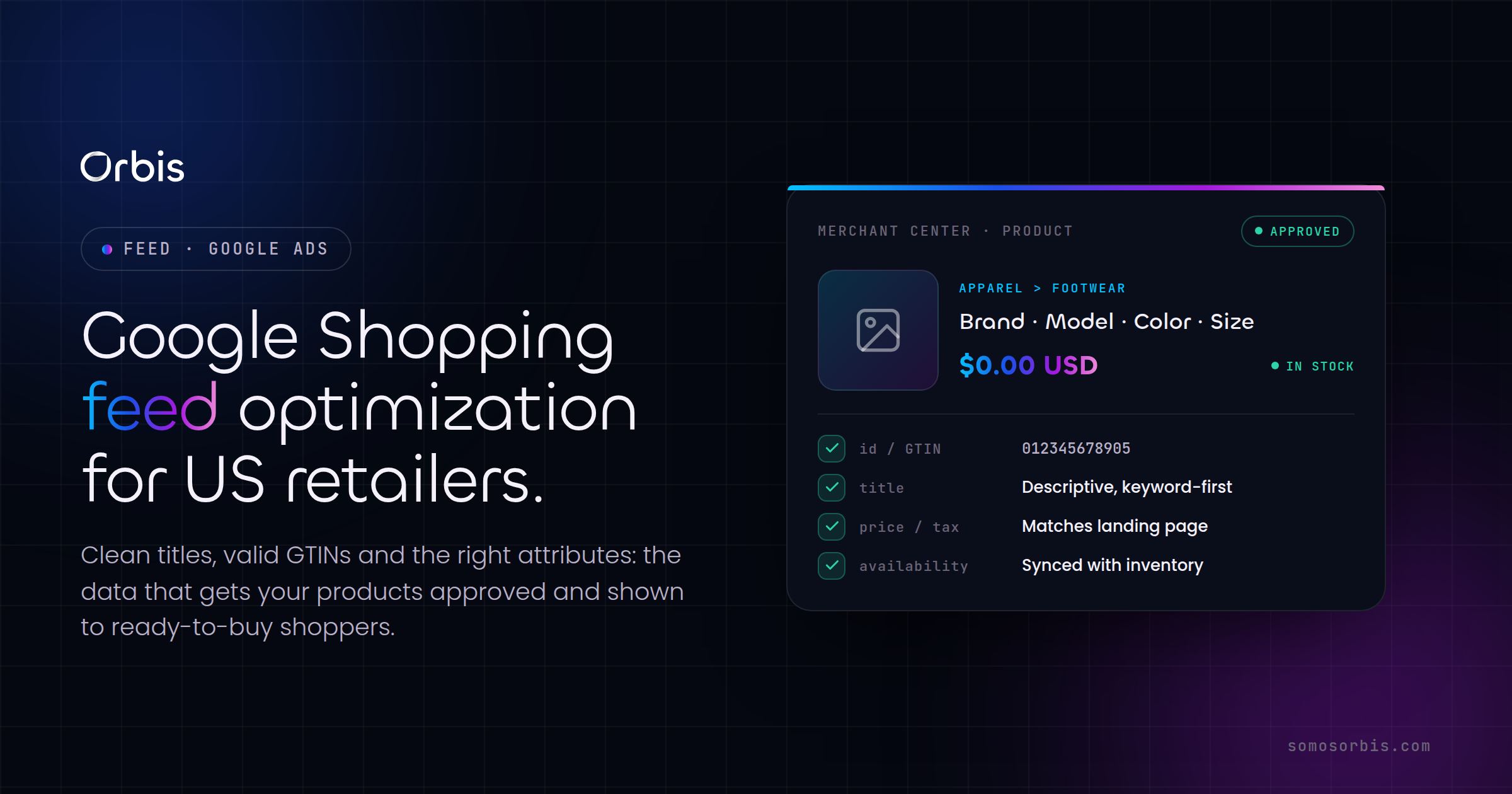
Global Trade Item Numbers, brand, and MPN are the identifiers that tell Google exactly which product you are selling. When you supply a valid GTIN, Google can match your offer to the product catalog it already understands, enrich your listing, and place you in more comparison auctions. Missing or wrong identifiers are one of the most common reasons US retailers underperform without realizing it.
Get identifiers right
- Provide GTINs whenever they exist. For most branded manufactured goods, a GTIN (usually the UPC barcode number on the package) is expected. Products that should have one and do not can be limited.
- Validate the GTIN. A 12-digit UPC or 13-digit EAN must pass its check digit. A single transposed number makes the identifier invalid and the product can be disapproved.
- Set
identifier_existsto false for genuinely unique items. Custom, handmade, vintage, or private-label products without a GTIN should declare that no identifier exists rather than leaving the field blank or faking a number. - Always send brand and MPN even when GTIN is present. Together they reinforce the match and protect you if a GTIN is questioned.
Treat identifier hygiene as a recurring quality check, not a one-time cleanup. New SKUs introduce new errors. A documented process that validates GTINs on every feed refresh keeps disapprovals from creeping back in.
USD pricing rules and feed accuracy
Price and availability mismatches are a leading cause of Shopping disapprovals and account warnings in the US. Google crawls your landing pages and compares them to your feed. If the feed says $49.99 and the page says $54.99, or the feed says "in stock" and the page is sold out, Google flags the discrepancy and can suppress the product or, in repeated cases, the whole account.
Pricing hygiene checklist
- Match feed price to landing page price exactly, including how taxes and shipping are presented. US sales tax varies by state, so configure tax settings correctly rather than baking inconsistent amounts into the price field.
- Use the sale price fields properly. Send
priceas the regular price andsale_price(with an effective date range) for promotions. This is what enables the strikethrough "price drop" annotation that lifts click-through rate. - Keep currency as USD and format consistently. Mixed or implied currencies cause matching problems.
- Sync availability in near real time. If your store sells out during a flash sale, the feed needs to reflect it within hours, not days. Stale availability burns budget on products you cannot ship.
Accurate pricing is also a compliance-by-design issue. US shoppers and US privacy and consumer norms expect the price they see in the ad to be the price at checkout. Reference prices and "was/now" claims should reflect genuine prior pricing. Getting this right protects both your Merchant Center account standing and your brand's trust with buyers.
Attribute completeness: fill every field that applies
Beyond titles and identifiers, the supplemental attributes are what let Google place your products into the right filters, comparison views, and refined searches. Incomplete data is invisible data.
- Product type and Google product category: Set both. Your own
product_typetaxonomy powers campaign segmentation; the Google category powers relevance and tax/shipping rules. - Apparel attributes: color, size, gender, age group, and material are effectively required for clothing to serve well. Missing size or color in US apparel feeds is a common silent killer.
- Images: use a clean, high-resolution main image on a white background with no promotional overlays, badges, or watermarks. Overlay text is a frequent disapproval.
- Descriptions: write real, attribute-rich descriptions. They contribute to matching even though they are weighted below the title.
- Custom labels: use
custom_label_0throughcustom_label_4to tag margin, seasonality, bestsellers, or clearance so you can bid differently in the auction.
Campaign structure that respects the feed
Feed quality and campaign structure work together. Once your data is clean, segment so that budget follows intent and margin. Custom labels make this practical.
- Split high-margin and low-margin products so you can bid more aggressively where the unit economics support it.
- Isolate bestsellers and seasonal heroes into their own campaigns or asset groups for peak windows.
- Use the feed's
product_typeto mirror your site taxonomy, which makes reporting and negative-keyword work far easier.
This is where feed work connects to broader account discipline. Cleaner data and tighter relevance also raise the quality signals that influence cost per click. If you want to go deeper on how Google evaluates ad and landing-page relevance, read our companion piece on how Quality Score works for US advertisers, then map those same relevance principles back into your Shopping titles and landing pages.
Seasonal feed playbook for US peak windows
US retail runs on a predictable calendar, and your feed should flex with it. The retailers who win the peak are the ones who prepared the feed weeks ahead, not the night before.
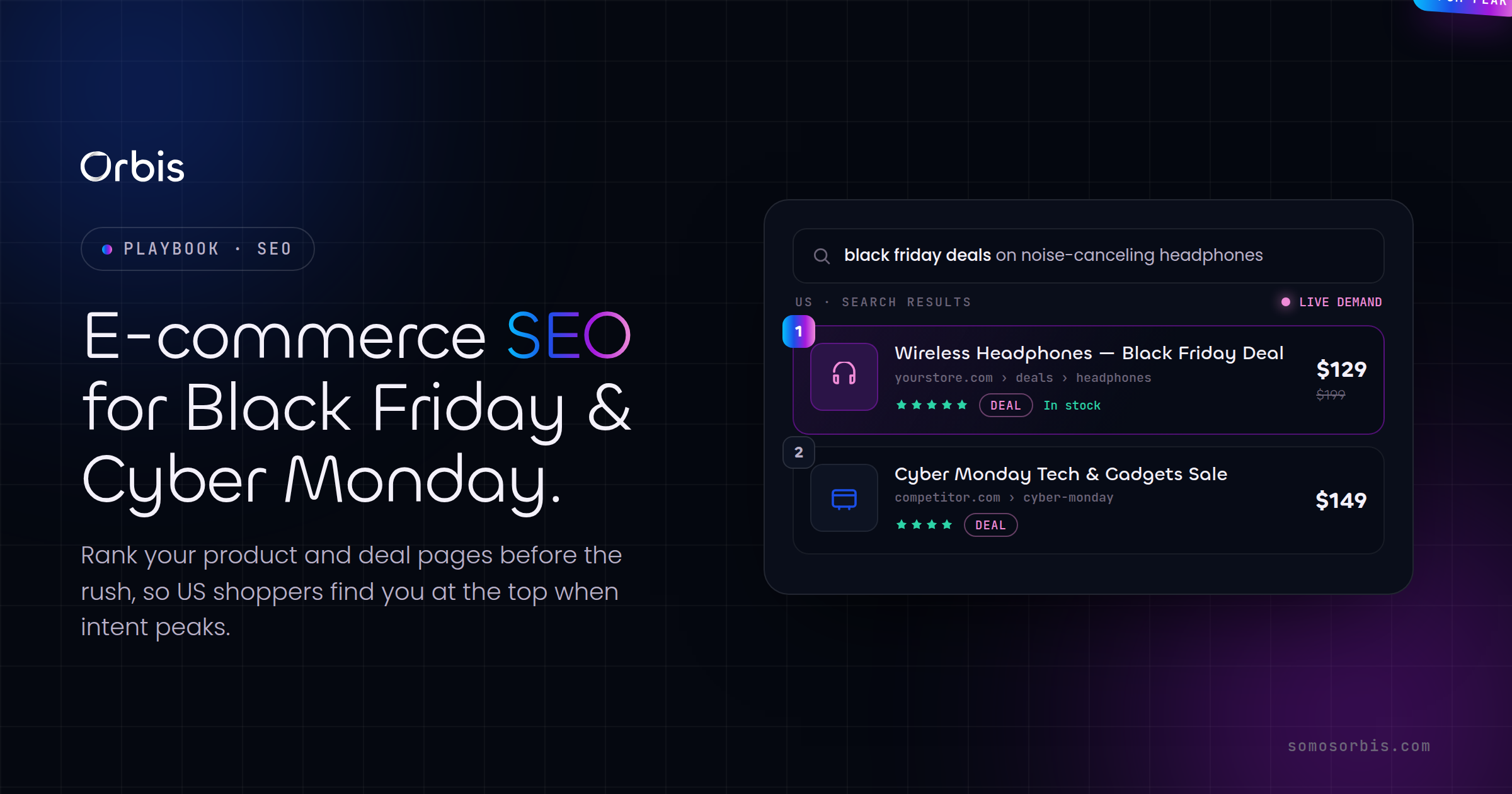
Black Friday and Cyber Monday
- Stage your
sale_pricevalues with effective date ranges in advance so price-drop annotations go live automatically. - Pre-tag deal SKUs with a custom label so you can scale budget the moment the window opens.
- Double-check inventory sync. Demand spikes mean fast sellouts; stale availability during BFCM is the most expensive feed error of the year.
Amazon Prime Day and the competitive mid-summer window
- Prime Day pulls deal-seeking US shoppers across the entire market, not just Amazon. Make sure your competitive SKUs have sharp titles and accurate prices so you capture the comparison shoppers who land on Google.
- Lean into price-competitive products in your structure during this window.
Back-to-school and tax season
- Back-to-school (roughly July through early September) rewards clear category and grade/age attributes for electronics, apparel, and supplies. Make sure age group and size data is complete.
- Tax season (January through April) drives spending in home office, software, and big-ticket categories. Highlight financing or value messaging through landing pages and keep pricing airtight.
Bilingual reach during peaks
Peak windows are exactly when the large US Hispanic market is shopping hardest. If you have built a Spanish-language feed variant, peaks are when it pays off most. Bilingual EN/ES titles and descriptions let you compete for queries your English-only competitors never see.
A repeatable feed audit checklist
Run this on a schedule, not just when something breaks. Documented, repeated checks are what keep impression share stable.
- Disapprovals and warnings in Merchant Center reviewed and resolved weekly.
- Titles audited against the brand + type + attributes formula for top-revenue SKUs.
- GTIN validity confirmed and
identifier_existsset correctly for unique items. - Feed price and availability matched to landing pages, with sale-price date ranges staged for the next promotion.
- Required apparel and category attributes filled; images free of overlays.
- Custom labels current for margin, season, and bestseller status.
- Seasonal calendar mapped so peak feed changes ship ahead of time.
How this fits your wider paid media strategy
Shopping does not operate in a vacuum. Feed optimization sits inside a broader engine of Search, Shopping, and remarketing that should reinforce each other. For the full picture of how to structure budgets, channels, and account architecture across the year, start with our complete paid media guide to Google Ads for US businesses in 2026, which ties Shopping feed work back into the rest of your account.
The pattern that separates the retailers who scale from the ones who plateau is rarely a clever bidding trick. It is revenue engineering: clean data, documented processes, and pricing accuracy that compounds across thousands of SKUs and every US peak season. Get the feed right and the auction starts working for you instead of against you.
The best Shopping campaign in the US is mostly an invisible one: a clean feed, accurate USD pricing, and titles that match how real shoppers search. Fix the data and the impressions follow.
Ready to turn your feed into impression share?
At Orbis we are a Google Partner with a 4.9-star rating across 58 reviews, more than 500 clients, and over 15 years optimizing paid media for businesses across the US market. We build feed processes that scale, keep your Merchant Center clean, and align Shopping with the rest of your account so your budget shows up where US shoppers are buying. If you want a team that treats your product feed as the revenue asset it is, explore our Google Shopping management services and let's get your catalog ready for the next peak.