
Revenue teams in the United States lose money in the gaps. A lead fills out a form at 11:40 PM during a Cyber Monday push in New York, and by the time someone in sales sees it the next morning, three competitors have already replied. A trial user in Austin hits their "aha" moment but never gets a nudge to upgrade. A bilingual prospect in Miami requests Spanish-language follow-up and gets an English drip sequence instead. None of these are strategy problems. They are plumbing problems, and plumbing is exactly what marketing and sales automation fixes.
This guide is for US revenue teams that want fewer dropped handoffs, faster speed-to-lead, and more USD on the board, without adding headcount or burning trust. We will walk through lead routing, nurturing, and the marketing-to-sales handoff, with concrete workflows you can ship and examples grounded in how American buyers actually behave, from Black Friday and Cyber Monday spikes to back-to-school and tax season.
Why automation is a revenue lever, not a cost-cutting tool
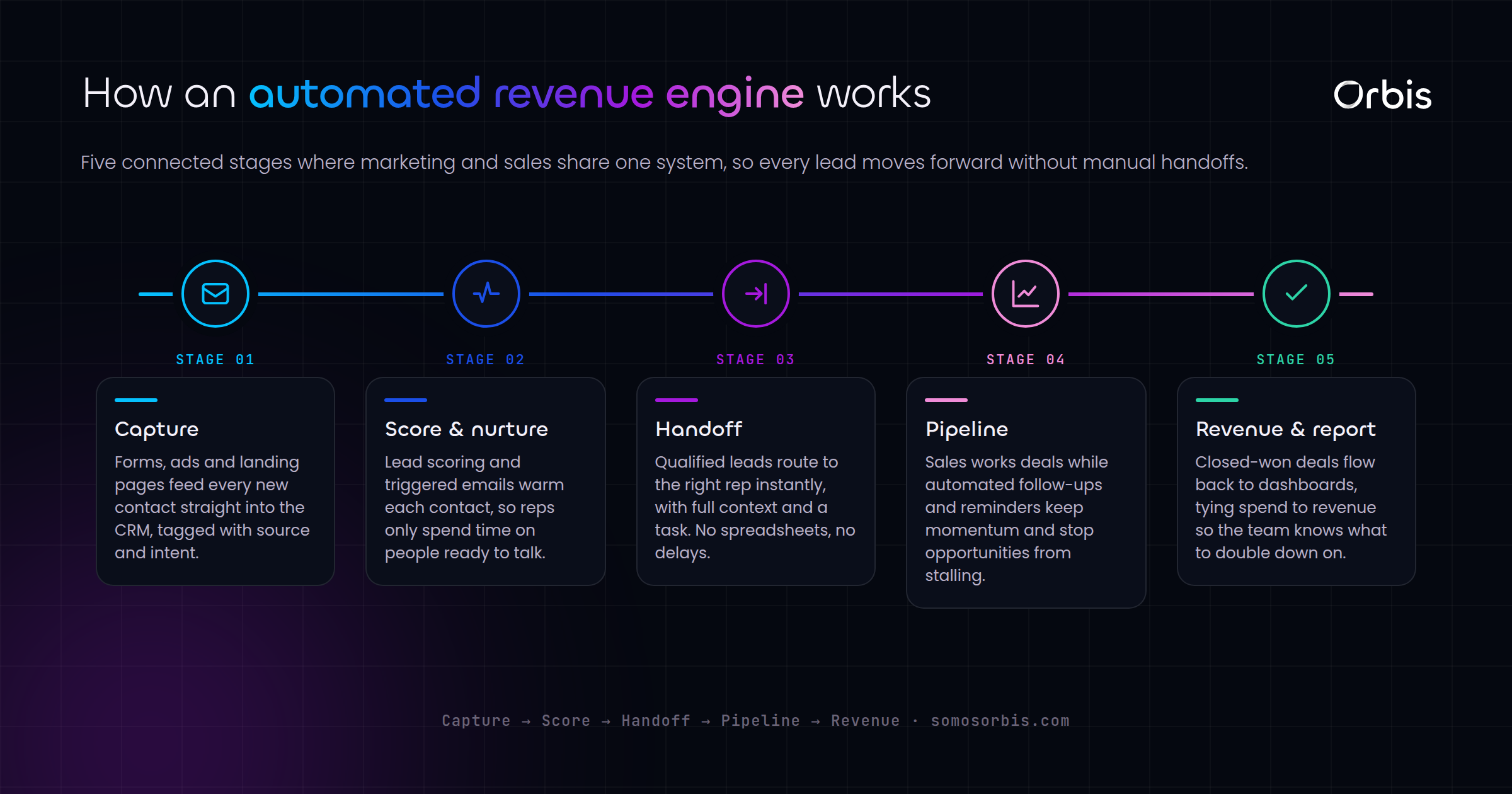
Most teams adopt automation to "save time." That framing undersells it. The real win is consistency at scale: every lead gets the right next action, every time, no matter the volume or the hour. When a campaign goes viral or Amazon Prime Day floods your funnel, manual processes break exactly when the stakes are highest. Automation holds.
Three numbers tend to move once automation is in place:
- Speed-to-lead. Responding within five minutes versus thirty changes contact and qualification rates dramatically. Automation closes that window without anyone watching the inbox.
- Lead-to-opportunity rate. Consistent nurturing keeps warm leads warm. People rarely buy on first touch; they buy on the seventh, when the timing is finally right.
- Sales capacity. When reps stop doing data entry and manual routing, they spend their hours on conversations that actually close. The same headcount carries more pipeline.
The point is not to remove humans. It is to remove the busywork between humans and buyers so people can do the part only people can do: build trust and close.
Lead routing: get the right lead to the right rep in seconds
Routing is where most US revenue leaks start. A lead that sits in a queue, lands with the wrong rep, or never gets assigned is a lead you paid to acquire and then quietly threw away. Good routing is invisible when it works and expensive when it does not.
Start with a routing model that matches how you sell
Before you automate anything, decide how leads should be distributed. Common models:
- Round-robin for a team selling a similar product to similar buyers. Simple and fair.
- Territory-based when geography matters. A retailer with reps covering the Northeast out of New York versus the West Coast out of Los Angeles needs leads routed by region and, often, by time zone so follow-up lands during business hours.
- Account-based when named accounts belong to specific reps. Any inbound from those companies should skip the queue and go straight to the owner.
- Skill- or language-based for the large US Hispanic market. A prospect who requests Spanish should route to a bilingual rep automatically, with the sequence switching to Spanish too. Getting EN/ES right at the routing layer is a differentiator, not a nice-to-have.
Build the routing workflow
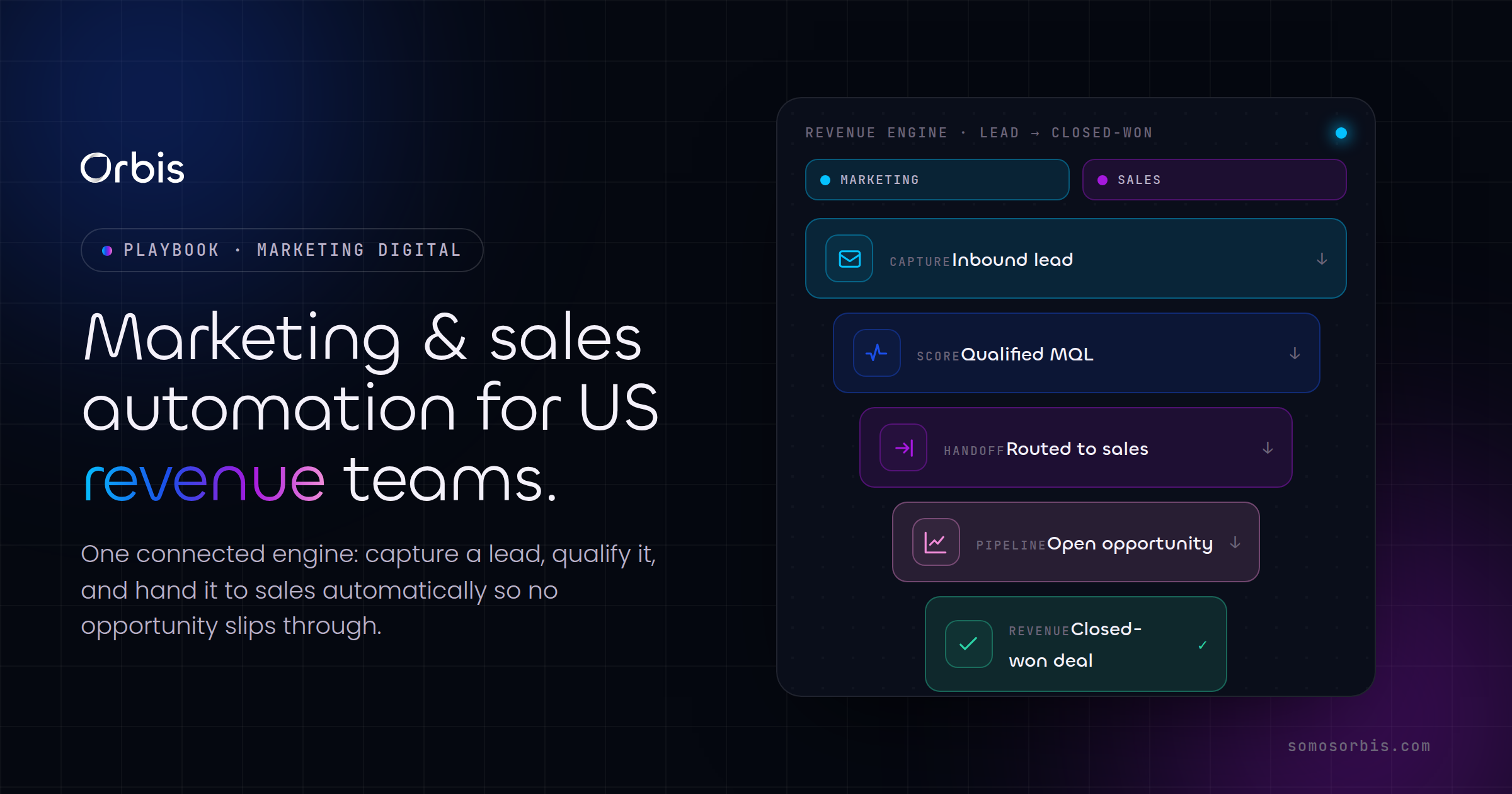
A workable routing flow looks like this:
- Capture the lead from any source: web form, chat, paid landing page, marketplace, or imported list.
- Enrich and validate so you route on real data, not typos. Normalize the email, infer company size, detect language preference.
- Score the lead against your fit and intent criteria.
- Assign by your chosen model and notify the rep instantly via the channel they actually watch.
- Set a fallback: if the assigned rep does not act within a set window, reassign so nothing rots in an inbox.
That last step, the fallback, is what separates a routing system that looks good in a diagram from one that protects revenue on a chaotic Black Friday weekend.
Lead scoring: spend attention where it pays
Not every lead deserves the same response. A free template download is not a demo request. Scoring lets you act accordingly, sending high-intent leads to a human fast and routing lower-intent leads into nurturing until they heat up.
Keep your first scoring model simple. You can refine it later with real outcome data.
- Fit signals (who they are): company size, industry, role, region. A director at a mid-market retailer in Chicago scores higher than a student doing research.
- Intent signals (what they did): pricing page views, demo requests, repeat visits, email engagement, replies. Behavior predicts buying better than demographics alone.
- Negative signals: competitors, students, role mismatches, and obvious test submissions should score down or out so reps do not waste cycles.
The goal is a clear threshold: above it, a human reaches out now; below it, automation keeps the relationship warm until the score crosses the line. Revisit the model quarterly against closed-won data so it reflects reality, not assumptions.
Nurturing: keep warm leads warm without spamming
Most leads are not ready to buy the day they arrive. Nurturing is how you stay present, useful, and top-of-mind until they are. Done well, it feels like helpful timing. Done poorly, it feels like a leaky faucet of irrelevant email, and US buyers unsubscribe fast.
Segment before you sequence
Generic nurturing converts poorly. Segment at minimum by:
- Funnel stage: a new subscriber and a stalled opportunity need different messages.
- Source and intent: someone from a pricing page is closer to buying than someone from a top-of-funnel blog post.
- Language: serve EN or ES based on stated preference, and keep that preference sticky across every future touch.
- Industry or use case: a SaaS buyer and an e-commerce buyer care about different outcomes; speak to each.
Design behavior-triggered sequences
Time-based drips have their place, but behavior-triggered automation outperforms because it reacts to what the buyer actually does:
- Welcome sequence for new leads: set expectations, deliver value, learn preferences.
- Engagement-triggered: when a lead views pricing twice or opens three emails, push them up the priority list and alert a rep.
- Re-engagement: when a lead goes quiet for 30 to 60 days, send a pattern-break message before they go cold for good.
- Seasonal: spin up dedicated paths for Black Friday and Cyber Monday, Amazon Prime Day, back-to-school, and tax season, when intent and budgets align and a well-timed message earns its keep.
Build in a cap on email frequency and honor preferences instantly. Respecting attention is not just polite; in the US, it is also how you stay aligned with privacy expectations and keep your sender reputation intact.
The marketing-to-sales handoff: where revenue is won or lost
You can have flawless routing and elegant nurturing and still lose the deal at the handoff. This is the seam between marketing and sales, and it is where context goes to die: a rep gets a name and an email but no idea what the lead read, downloaded, or asked for. Automation can carry that context across the seam so the first sales conversation starts warm instead of cold.
Define the handoff before you automate it
Marketing and sales need a shared definition of a qualified lead and a shared agreement on what happens at handoff. Put it in writing:
- What score or trigger makes a lead "sales-ready."
- What context transfers with the lead: source, pages viewed, content consumed, language preference, explicit requests.
- How fast the rep must follow up, and what happens if they do not.
- How a lead gets returned to nurturing if it is not ready, so nothing falls between the teams.
Make the handoff instant and information-rich
When a lead crosses the threshold, the system should create or update the opportunity, attach the full activity history, notify the right rep on their preferred channel, and start the clock on the follow-up SLA. The rep opens the record and already knows the story. That is the difference between "Hi, how can I help?" and "I saw you were comparing options for your Dallas store ahead of the holidays, here is exactly how we help with that."
The handoff is not a baton pass between departments. It is a single, continuous experience for the buyer, who neither knows nor cares where your org chart draws its lines.
Respecting US privacy expectations by design
Automation touches personal data at every step, so privacy cannot be an afterthought bolted on at the end. In the US, buyers increasingly expect control over their data and clear choices about how it is used, and several states give them enforceable rights to access, delete, and opt out. Build for that from the start.
- Collect with consent and clarity. Be explicit about what you collect and why. Clear beats clever on every form.
- Honor opt-outs immediately. When someone unsubscribes or asks to opt out of data sharing, your automation should reflect it everywhere, instantly, with no manual cleanup.
- Minimize what you store. Collect what you need to route and nurture, not everything you could possibly grab.
- Keep an audit trail. Know where data came from, what consent it carries, and where it flows. This is the backbone of compliance and the thing most teams skip.
This is what we mean by compliance by design: privacy-respecting workflows and documented processes built in from day one, not patched on after a complaint. It protects the business and, just as importantly, protects the trust that makes US buyers say yes.
A practical rollout sequence
You do not need to automate everything at once. Trying to boil the ocean is the most common way these projects stall. Sequence it:
- Phase 1, fix routing. Get every lead to the right rep fast with a reliable fallback. This alone recovers revenue you are currently losing to slow or missed follow-up.
- Phase 2, add scoring and the handoff. Make sales-ready a clear, automatic threshold and carry full context across the seam.
- Phase 3, build nurturing. Layer in segmented, behavior-triggered sequences for the leads not yet ready to buy.
- Phase 4, optimize. Use real outcome data to refine scoring, sequences, and routing rules quarterly.
Each phase pays for itself before you start the next, which keeps the project funded and the team bought in.
How the pieces fit your broader stack
Automation does not live in a vacuum. It depends on clean data flowing between your CRM, your marketing platform, your forms, and your analytics. If those systems do not talk to each other, your automation acts on stale or partial data and quietly makes things worse. That is why automation and integration are two sides of the same project. For a deeper look at connecting the systems underneath, see our guide on API and systems integrations for US marketing stacks, which covers how to keep data consistent across the tools your automation relies on.
And if you are planning a larger rollout across your martech, this guide is one piece of a bigger picture. Our pillar on marketing tech implementations for US teams in 2026 walks through scoping, sequencing, and shipping a full implementation, with automation and integrations as core building blocks.
Common mistakes that quietly kill results
- Automating a broken process. If your routing logic is wrong, automation just makes the wrong thing happen faster. Fix the process first.
- Over-nurturing. Too many emails train people to ignore you or unsubscribe. Respect frequency caps and let behavior set the pace.
- No fallback. Every routing and follow-up step needs a "what if nobody acts" branch, or leads will rot in the gaps.
- Ignoring language preference. Sending English to a buyer who asked for Spanish wastes a real US market opportunity and signals you were not listening.
- Set-and-forget. Automation is not a slow cooker. Review performance against closed-won data and tune it regularly.
Bring it together with a partner who has done it before
Marketing and sales automation is not about buying another tool. It is about designing workflows that route, nurture, and hand off leads consistently, respect how US buyers expect their data to be handled, and turn more of your funnel into USD revenue. The teams that win treat it as an ongoing system, not a one-time setup, and they build it on documented, privacy-respecting processes from the start.
If you want help designing and shipping automation that actually moves revenue, our team can build it with you, from routing and scoring to nurturing and the handoff. Explore our marketing and sales automation implementation services and let's turn your dropped handoffs into closed deals. With Google Partner status, a 4.9-star rating across 58 reviews, more than 500 clients, and over 15 years of experience, we build revenue engines that hold up when the stakes are highest.